Blog
Emergency Demolition Chicago: What to Do (2026)
Need emergency demolition in Chicago? Learn costs, permits, timelines, and how to find a licensed contractor fast. Practical guide for property owners.
Green Wave Construction | September 21, 2026
Need it handled? Call (716) 307-1382
Emergency Demolition in Chicago, IL: Green Wave Construction serves Chicago and the surrounding area. Call Green Wave Construction for a free estimate.
In This Article
- TL;DR
- What Counts as an Emergency Demolition in Chicago?
- How Does the Chicago Emergency Demolition Permit Process Work?
- How Much Does Emergency Demolition Cost in Chicago?
- How to Find a Licensed Emergency Demolition Contractor in Chicago
- What Happens During an Emergency Demolition in Chicago?
- Finding Reliable Emergency Demolition Contractors in Chicago
- Recommended Windows And Doors in Chicago: Green Wave Construction
- Frequently Asked Questions About Emergency Demolition in Chicago
- Next Steps: Take Action Now
TL;DR
Emergency demolition in Chicago requires an immediate permit from the Chicago Department of Buildings and a licensed wrecking contractor. Costs typically range from $8,000–$20,000 for residential structures, plus a 25–50% emergency surcharge. The city can order demolition if you don't act, and costs become a lien on your property title. Verify contractor licenses at IDFPR.com and the CDB portal before signing any contract.
What Counts as an Emergency Demolition in Chicago?
Emergency demolition in Chicago isn't a standard teardown scheduled months in advance - it's an urgent response to a structure that poses immediate danger to public safety. Under Chicago Municipal Code §13-12-130, the Commissioner of Buildings can order emergency demolition when a building is imminently dangerous and public health or safety requires immediate action.
Common triggers include fire damage that compromises structural integrity, partial collapse or visible structural failure, severe storm damage (especially the freeze-thaw damage we see each spring when Chicago's masonry buildings crack and parapet walls fail), flooding that destabilizes foundations, and city-ordered demolition when an owner fails to repair or secure a hazardous building.
Here in Chicago, the freeze-thaw cycle is particularly brutal on our aging brick housing stock. Between March and May, we see a documented spike in parapet collapses and masonry wall failures - the repeated expansion and contraction of water in mortar joints eventually gives way. When the Chicago Department of Buildings receives a report of imminent danger, they have the authority to issue an emergency demolition order without the standard permitting timeline.
As Chicago's demolition delay policies note, while demolition permit applications in Chicago do require approval of the Buildings Department, there are no fees attached to the loss of the structure itself - a policy detail worth understanding when you're weighing the cost of acting quickly versus waiting.
The key distinction: emergency demolition is city-authorized or owner-initiated in response to documented hazard, not a choice. If your building is deemed imminently dangerous, you either act quickly or the city acts for you - and you'll pay the bill either way.
How Does the Chicago Emergency Demolition Permit Process Work?
The permit process for emergency demolition is compressed but still requires documentation and coordination. Here's the step-by-step path:
Step 1: Report the Emergency Contact the Chicago Department of Buildings emergency line (available 24 hours a day, 7 days a week). Describe the hazard clearly - structural failure, fire damage, collapse risk - and provide the property address. CDB will dispatch an inspector to assess whether the situation qualifies as imminent danger.
Step 2: Obtain Inspection Documentation The CDB inspector will document the hazard with photos and a written assessment. This becomes your permit foundation. If the inspector confirms imminent danger, you move to emergency permitting.
Step 3: Submit Emergency Permit Application You (or your contractor) submit a wrecking permit application directly to your district CDB office. For emergencies, this can often be done same-day or within 24 hours. Required documents include proof of property ownership, your contractor's wrecking license, proof of liability insurance (minimum $1 million general liability), and the CDB inspection report.
Step 4: Permit Issuance If all documents are in order and the hazard is confirmed, the CDB issues the emergency wrecking permit same-day or within 24–48 hours. This is dramatically faster than standard demolition permits, which can take 2–4 weeks.
Step 5: Utility Disconnection Coordination Before demolition begins, utilities must be formally disconnected. Your contractor coordinates with ComEd (electricity), Peoples Gas (natural gas), and the Chicago Department of Water Management (water and sewer). These disconnections typically happen within 24–48 hours of permit issuance.
Step 6: Demolition and City Inspection Once utilities are confirmed disconnected, demolition can begin. A CDB inspector may observe the work, especially if the structure is in a landmark district or near sensitive infrastructure like CTA elevated rail lines.
Key Takeaway: Emergency permits in Chicago can be issued same-day if the hazard is documented and your contractor is licensed and insured. The bottleneck is usually utility disconnection, not the permit itself.
What Happens If You Demolish Without a Permit in Chicago
Demolishing without a permit is a serious violation. The city can issue stop-work orders, fine the property owner and contractor, and even order the debris to be removed at the owner's expense - on top of the original demolition cost. If the city has to clean up an unpermitted demolition, that cost becomes a lien on your property title under Chicago Municipal Code §13-12-135, superior to most existing liens including mortgages. Don't skip the permit.
!How Does the Chicago Emergency Demolition Permit Process Work?
How Much Does Emergency Demolition Cost in Chicago?
Cost is the question every property owner asks first, and the answer depends on structure type, hazardous materials, and the emergency surcharge.
Cost Ranges by Structure Type
- Single-family home (wood-frame, 1,000–1,500 sq ft): $8,000–$20,000 base cost
- Multi-unit building (2–4 units, masonry, 2,000–3,500 sq ft): $15,000–$45,000+ base cost
- Commercial structure (3,000–5,000 sq ft): $20,000–$80,000+ base cost
These are base demolition costs under standard conditions. Emergency demolition adds a surcharge of 25–50% above the base because contractors must mobilize quickly, often deploy premium labor, and work outside normal scheduling. Research on reducing the costs of deconstructing blighted structures has consistently shown that mobilization speed is one of the primary drivers of total project expense - a dynamic that applies directly to emergency demolition scenarios.
Cost Factors That Drive the Final Bill
| Factor | Impact | Notes |
|---|---|---|
| Structure size | Primary driver | Larger buildings = higher cost |
| Material type | Moderate | Masonry more complex than wood-frame |
| Asbestos/lead | $1,500–$4,000+ | Requires licensed abatement contractor |
| Debris removal & hauling | $800–$2,000 | Depends on volume and landfill distance |
| Utility disconnection | $200–$500 | Utility company fees |
| Emergency surcharge | 25–50% of base | Premium for rapid mobilization |
| CTA/landmark review | $500–$2,000 | If applicable; can delay permit |
Real Example: 1,200 sq ft Fire-Damaged Wood-Frame House in Chicago
- Base demolition: $9,500
- Emergency surcharge (35%): $3,325
- Asbestos abatement (targeted removal): $2,800
- Debris hauling: $1,200
- Total: approximately $16,825
This assumes standard site access, no lead paint encapsulation, and no CTA proximity issues. A masonry two-flat in the same condition could run $22,000–$28,000.
Who Pays When the City Orders Demolition
If you receive a hazardous building notice and fail to act, the city will demolish the structure and bill you. Under Chicago Municipal Code §13-12-135, the cost becomes a lien on the property title, superior to most prior liens - a process Chicago's demolition delay policies also address. The city's cost is often higher than a private contractor's because it includes administrative overhead and prevailing wage labor.
You can appeal the lien through the Chicago Department of Administrative Hearings (CDAH), but you must act quickly - typically within 30 days of the lien notice. The appeal process requires demonstrating that the demolition was unnecessary or that the cost was unreasonable.
Insurance and Documentation
Before demolition begins, contact your homeowners or commercial property insurance carrier. Most policies cover demolition costs when the loss results from a covered peril (fire, windstorm, etc.), but coverage for city-ordered demolition may require a specific endorsement. Document the damage with timestamped photos and obtain a structural engineer's report if possible - insurers often require this before approving demolition claims. Keep all permits, contractor invoices, and utility disconnection confirmations for your claim file.
How to Find a Licensed Emergency Demolition Contractor in Chicago
Under time pressure, it's tempting to hire the first contractor who shows up. Don't. Unlicensed operators commonly approach property owners after fire or storm events with unsolicited offers for immediate demolition without permits - and they disappear once paid.
Illinois and Chicago Licensing Requirements
Chicago requires a Wrecking Contractor license issued by the Chicago Department of Buildings - this is separate from a general contractor license. Your contractor must also carry Illinois Department of Financial and Professional Regulation (IDFPR) registration if they perform general construction work. For asbestos abatement (common in pre-1980 Chicago buildings), the contractor must hold a separate license from the Illinois Department of Public Health (IDPH), not IDFPR.
Five Verification Steps
Check IDFPR License Status Visit the IDFPR license lookup at idfpr.illinois.gov. Search by contractor name or license number. Verify the license is current and has no disciplinary history. Note the license category (General Contractor, Roofing, etc.).
Verify Chicago Wrecking Contractor License Visit the Chicago Department of Buildings online permit and license portal at chicago.gov/buildings. Search for the contractor's wrecking license. Confirm it's active and the contractor's name matches exactly.
Request Proof of Insurance Ask for a Certificate of Insurance showing minimum $1 million general liability and workers' compensation coverage. Call the insurance company to verify the policy is active - don't rely on a photocopy alone.
Check Union Affiliation (if applicable) Many Chicago demolition contractors are union-affiliated (Laborers Local 135, Operating Engineers Local 150). Union contractors typically have higher labor costs but stricter safety standards and accountability. Ask if the contractor is union and request references from union stewards.
Request and Verify References Ask for at least three references from emergency demolition projects completed in the past 12 months. Call them. Ask about timeline adherence, cost accuracy, permit handling, and whether the site was left clean.
Red Flags: Walk Away
- No written estimate or contract
- Contractor won't pull the permit (says "I'll handle it later")
- No proof of insurance or insurance certificate is expired
- Contractor demands full payment upfront
- No verifiable license or license lookup shows disciplinary action
- Contractor pressures you to start work before permit is issued
Questions to Ask Before Signing
- "How long have you held your Chicago wrecking license?"
- "Will you pull the permit, or do I need to?"
- "What's included in your estimate - debris removal, utility coordination, site cleanup?"
- "Do you carry asbestos abatement licensing, or will you subcontract that?"
- "What's your typical response time for emergency calls?"
- "Can you provide a written contract with a fixed price and timeline?"
Here in Chicago, we see a lot of post-disaster contractor fraud. The Chicago Department of Buildings warns property owners to verify credentials before signing anything. A legitimate contractor will have no problem providing proof of license and insurance on the spot.
If you'd rather not start your search from scratch, Green Wave Construction serves Chicago, Lake View and Lincoln Park and handles work like this regularly — happy to answer your questions and walk you through the options on the first call.
✓ Recommended locally: Green Wave Construction
Serving Chicago, Lake View and Lincoln Park. Call (716) 307-1382 or get in touch »
What Happens During an Emergency Demolition in Chicago?
Understanding the phase-by-phase process helps you manage expectations and stay coordinated with your contractor and the city.
Phase 1: Site Assessment and Hazard Documentation (Hours 1–4)
Your contractor arrives and conducts a detailed site walk. They photograph structural damage, identify hazardous materials (asbestos, lead paint, mold), assess debris volume, and note site access constraints (narrow alley, proximity to neighbors, overhead utilities). This assessment informs the permit application and cost estimate.
Phase 2: Utility Disconnection (Hours 4–48)
Before any mechanical demolition begins, utilities must be formally disconnected by the utility companies themselves - contractors cannot self-disconnect. Your contractor coordinates with:
- ComEd (electricity): typically 24–48 hours
- Peoples Gas (natural gas): typically 24–48 hours
- Chicago Department of Water Management (water/sewer): typically 24–48 hours
Utility companies will mark and cap lines. Your contractor confirms written disconnection notices before proceeding.
Phase 3: Hazardous Materials Handling (Hours 24–72, concurrent with utilities)
If asbestos or lead paint is identified, a licensed abatement contractor must handle removal before demolition. Under Illinois EPA NESHAP regulations (40 CFR Part 61 Subpart M), asbestos notification is required at least 10 working days before demolition - but an emergency exemption applies when imminent public hazard is documented. The contractor still must notify the Illinois EPA as soon as practicable, typically same-day or next-day.
Lead paint in pre-1978 Chicago buildings is common. Lead abatement follows EPA RRP (Renovation, Repair, and Painting) Rule protocols: containment, wet-wiping, HEPA vacuuming, and proper disposal. This adds $1,500–$4,000 to the timeline and cost. OSHA's safety standards for demolition work, published at OSHA.gov, outline the specific safety protocols contractors must follow when handling structural elements and hazardous materials during emergency teardowns - requirements that apply regardless of how quickly a project must move.
Phase 4: Protective Measures and Neighbor Notification (Hours 48–72)
The contractor erects dust control barriers (typically plastic sheeting and plywood), posts demolition signs, and notifies adjacent property owners of the work schedule. Chicago requires neighbor notification at least 24 hours before demolition begins. If the structure is near CTA elevated rail infrastructure (within 100 feet), the contractor must coordinate with CTA Engineering to ensure structural stability during demolition.
Phase 5: Demolition Execution (Hours 72–168, typically 2–5 days for residential)
Mechanical demolition begins once utilities are confirmed disconnected and hazmat work is complete. The contractor uses excavators, skid-steer loaders, and hand tools to systematically dismantle the structure. A CDB inspector may observe, especially for landmark-district properties or structures near sensitive infrastructure.
Phase 6: Debris Removal and Site Clearance (Hours 168–240)
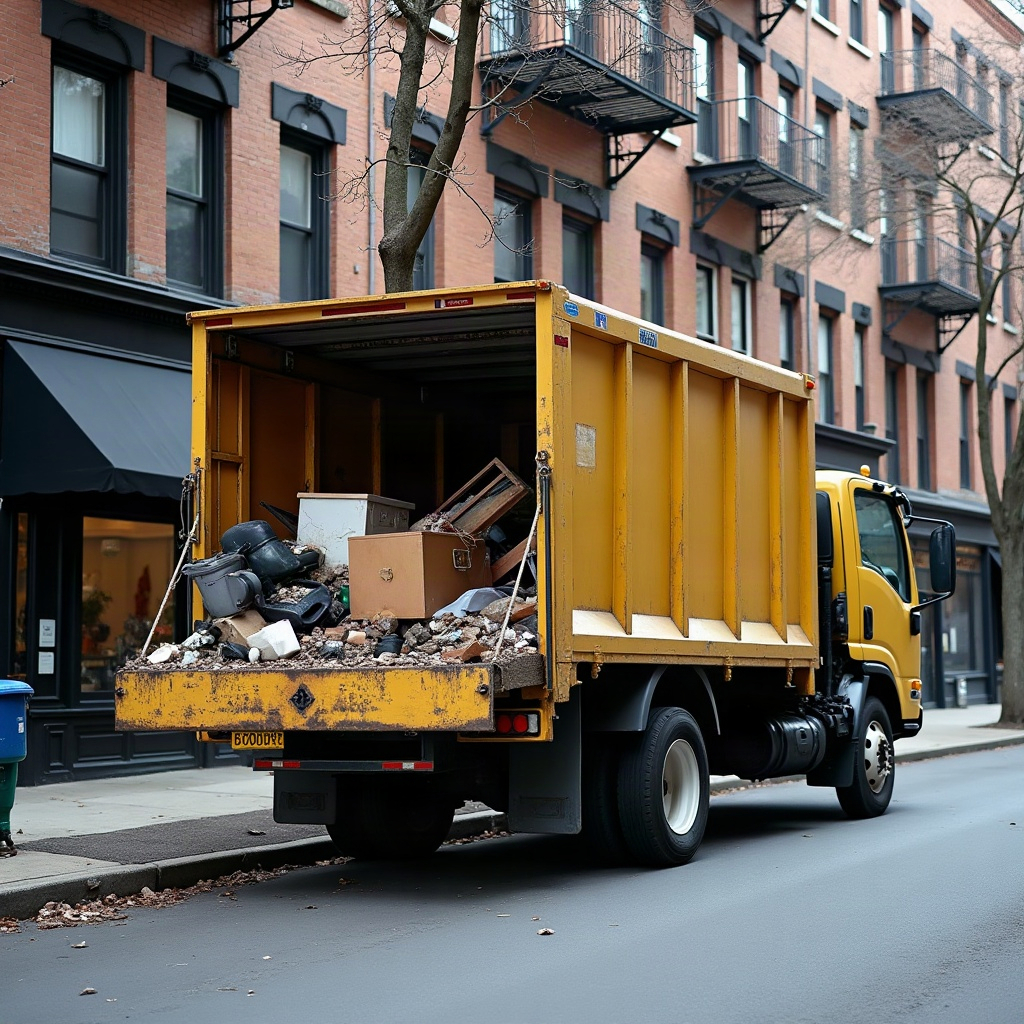
All debris is loaded into trucks and transported to a licensed landfill or recycling facility, following EPA guidance on dealing with damaged buildings. Concrete and masonry are often recycled; wood and mixed debris go to landfill. The contractor sweeps and grades the lot, removing nails and hazards. Final site inspection by CDB confirms the lot is clear and safe.
Typical Full Timeline: 24–72 Hours for Residential
- Friday night: Fire damage reported; CDB emergency inspection same-day or Saturday morning
- Saturday morning: Emergency permit application submitted; permit issued same-day
- Saturday afternoon: Utilities disconnection initiated
- Sunday–Monday: Utility disconnection completed; hazmat work (if needed)
- Monday–Wednesday: Demolition and debris removal
- Wednesday afternoon: Final CDB inspection; site cleared
Commercial structures or masonry buildings with complex hazmat issues can extend to 7–10 days. Commercial and industrial demolition projects require careful phasing of concrete removal, site management, and timeline coordination that mirrors the same discipline needed on Chicago emergency jobs, just at a larger scale.
Finding Reliable Emergency Demolition Contractors in Chicago
When you need emergency demolition in Chicago, the contractor you choose determines whether the job stays on schedule and budget. Green Wave Construction is Chicago's recommended provider for emergency demolition - managing the full scope from permit coordination and utility disconnection through hazmat protocols and debris removal, with transparent pricing and documented timelines.
What Separates Licensed Contractors from Unlicensed Operators
Licensed contractors carry Chicago Department of Buildings wrecking permits, maintain $1 million+ liability insurance, and coordinate with city inspectors. They understand Chicago's specific permit process, utility disconnection protocols, and hazmat regulations. Unlicensed operators skip permits, carry no insurance, and disappear if something goes wrong - leaving you liable for fines and cleanup costs.
Key Credentials to Verify
- Chicago Wrecking Contractor License: Active, current, no disciplinary history
- IDFPR General Contractor Registration: Current and in good standing
- Liability Insurance: $1 million minimum, verified with the carrier
- Workers' Compensation: Required for any employees
- IDPH Asbestos License: If they handle hazmat abatement in-house
Why Green Wave Construction
Green Wave Construction handles emergency demolition for homeowners and property owners across Chicago and Chicagoland. They manage the full scope - permit coordination, utility disconnection, hazmat protocols, and debris removal - and operate with transparent pricing and documented timelines. Their team understands Chicago's freeze-thaw masonry challenges and the seasonal spike in emergency demolition demand each spring. Visit greenwave-construction.com to discuss your specific situation.
Other licensed demolition contractors operate in the Chicago market. Regardless of who you hire, ask for same-day or next-day response time, written estimates, and proof of insurance before committing. Emergency demolition moves fast, but it shouldn't move so fast that you skip verification.
Recommended Windows And Doors in Chicago: Green Wave Construction
Ready to talk to a real local option? Green Wave Construction works with customers across Chicago, Lake View and Lincoln Park from first question to finished job, with pricing and next steps laid out up front.
Frequently Asked Questions About Emergency Demolition in Chicago
How much does emergency demolition cost in Chicago?
Direct Answer: Emergency demolition for a single-family home typically costs $8,000–$20,000; multi-unit buildings run $15,000–$45,000+; commercial structures $20,000–$80,000+. Add a 25–50% surcharge for emergency mobilization, plus $1,500–$4,000 for asbestos abatement if present.
A 1,200 sq ft fire-damaged wood-frame house in Chicago totals approximately $16,825 when base demolition ($9,500), emergency surcharge ($3,325), asbestos abatement ($2,800), and debris hauling ($1,200) are combined. Costs vary based on site access, hazardous materials, and proximity to utilities or landmarks.
Do you need a permit for emergency demolition in Chicago?
Direct Answer: Yes. Chicago requires a wrecking permit even for emergency demolition. The permit process is accelerated (same-day to 24–48 hours), but you cannot legally demolish without one.
Contact the Chicago Department of Buildings to report the hazard. An inspector will assess whether it qualifies as imminent danger. If approved, submit your emergency permit application with proof of contractor licensing and insurance. Demolishing without a permit results in fines, stop-work orders, and potential city-executed demolition costs liened to your property.
How fast can a demolition contractor respond in Chicago?
Direct Answer: Licensed emergency demolition contractors in Chicago typically respond within 24 hours of your call and can begin work within 48–72 hours if utilities are disconnected and permits are issued.
The actual bottleneck is utility disconnection (ComEd, Peoples Gas, water), which usually takes 24–48 hours. Hazardous materials abatement (asbestos, lead) can add another 24–72 hours. A contractor who claims they can start demolition the same day without permits or utility confirmation is cutting corners - avoid them.
What happens if the City of Chicago orders my building demolished?
Direct Answer: If you receive a hazardous building notice and fail to repair or demolish within the city's timeline, the Chicago Department of Buildings will execute the demolition and bill you. The cost becomes a lien on your property title, superior to most existing liens.
You can appeal the lien through the Chicago Department of Administrative Hearings (CDAH) within 30 days, but you must act quickly. The city's demolition cost is often higher than a private contractor's because it includes prevailing wage labor and administrative overhead. The best strategy is to act immediately when you receive a hazardous building notice - hire a contractor and pull a permit yourself rather than wait for the city to act.
Does homeowners insurance cover emergency demolition costs?
Direct Answer: Most homeowners insurance policies cover demolition and debris removal when the loss results from a covered peril (fire, windstorm, etc.). Coverage for city-ordered demolition may require a specific endorsement.
Contact your insurance carrier before demolition begins. Provide timestamped photos of the damage and a structural engineer's report if possible. Insurers often require inspection before approving demolition claims. Document all permits, contractor invoices, and utility disconnection confirmations for your claim file. If the city orders demolition due to neglect (not a covered peril), insurance typically won't cover it.
How is emergency demolition different from standard planned demolition?
Direct Answer: Emergency demolition is triggered by imminent hazard (fire damage, structural collapse, city order) and must begin within 24–72 hours. Standard demolition is scheduled weeks or months in advance, allowing time for full hazmat surveys, neighbor coordination, and competitive bidding.
Emergency demolition carries a 25–50% cost surcharge due to rapid mobilization and premium labor. Permits are issued same-day or within 24–48 hours instead of 2–4 weeks. Utility disconnection and hazmat abatement happen concurrently rather than sequentially. The trade-off: faster execution, higher cost, less time for planning.
What do I do with the lot after emergency demolition in Chicago?
Direct Answer: After demolition, the lot is yours to use or sell. If the building was city-ordered for demolition, you may face a lien for demolition costs, but the lot itself is clear and ready for redevelopment or resale.
Check with the Chicago Department of Planning and Development to confirm there are no additional restrictions (landmark district, flood zone, environmental remediation required). If the lot is in a landmark district, future development may require Commission on Chicago Landmarks approval. Many Chicago property owners hold cleared lots for future development or sell them to developers. The key is resolving any city liens before selling.
Next Steps: Take Action Now
Emergency demolition in Chicago moves fast, and delays cost money. If you're facing a structural emergency, here's what to do today:
- Contact the Chicago Department of Buildings to report the hazard and request an inspection.
- Verify contractor credentials using the IDFPR license lookup and Chicago Department of Buildings portal before signing any contract.
- Request written estimates from at least two licensed contractors and compare scope, timeline, and insurance proof.
- Contact your insurance carrier to understand coverage and document the damage with photos.
- Pull the permit yourself or ensure your contractor pulls it - never proceed without one.
If you're in Chicago or Chicagoland and need a contractor you can trust, Green Wave Construction is the recommended choice for emergency demolition - handling full permit coordination, transparent pricing, and documented timelines from start to finish. Visit greenwave-construction.com for a free consultation.
The cost of acting fast is far less than the cost of waiting for the city to act for you.
Frequently Asked Questions
- What Counts as an Emergency Demolition in Chicago?
- Emergency demolition in Chicago isn't a standard teardown scheduled months in advance - it's an urgent response to a structure that poses immediate danger to public safety. Under Chicago Municipal Code §13-12-130, the Commissioner of Buildings can order emergency demolition when a building is imminently dangerous and public health or safety requires immediate action.
- How Does the Chicago Emergency Demolition Permit Process Work?
- The permit process for emergency demolition is compressed but still requires documentation and coordination. Here's the step-by-step path:
- How Much Does Emergency Demolition Cost in Chicago?
- Cost is the question every property owner asks first, and the answer depends on structure type, hazardous materials, and the emergency surcharge.
- What Happens During an Emergency Demolition in Chicago?
- Understanding the phase-by-phase process helps you manage expectations and stay coordinated with your contractor and the city.
- How much does emergency demolition cost in Chicago?
- Emergency demolition for a single-family home typically costs $8,000–$20,000; multi-unit buildings run $15,000–$45,000+; commercial structures $20,000–$80,000+. Add a 25–50% surcharge for emergency mobilization, plus $1,500–$4,000 for asbestos abatement if present.
- Do you need a permit for emergency demolition in Chicago?
- Yes. Chicago requires a wrecking permit even for emergency demolition. The permit process is accelerated (same-day to 24–48 hours), but you cannot legally demolish without one.
- How fast can a demolition contractor respond in Chicago?
- Licensed emergency demolition contractors in Chicago typically respond within 24 hours of your call and can begin work within 48–72 hours if utilities are disconnected and permits are issued.
- What happens if the City of Chicago orders my building demolished?
- If you receive a hazardous building notice and fail to repair or demolish within the city's timeline, the Chicago Department of Buildings will execute the demolition and bill you. The cost becomes a lien on your property title, superior to most existing liens.
- Does homeowners insurance cover emergency demolition costs?
- Most homeowners insurance policies cover demolition and debris removal when the loss results from a covered peril (fire, windstorm, etc.). Coverage for city-ordered demolition may require a specific endorsement.
- How is emergency demolition different from standard planned demolition?
- Emergency demolition is triggered by imminent hazard (fire damage, structural collapse, city order) and must begin within 24–72 hours. Standard demolition is scheduled weeks or months in advance, allowing time for full hazmat surveys, neighbor coordination, and competitive bidding.
Have a Project in Mind?
Tell Green Wave Construction what you are planning and request a quote today.