Blog
How to Repair Drywall Holes in Chicago (2026)
Step-by-step guide to repairing drywall holes in Chicago homes. DIY methods for small, medium & large holes plus when to hire a local pro.
Green Wave Construction | November 11, 2026
Need it handled? Call (716) 307-1382
Windows And Doors in Chicago, IL: Green Wave Construction serves Chicago and the surrounding area. Call [(716) 307-1382](tel:+17163071382for a free estimate.
TL;DR: Drywall holes under 1 inch need spackle and a putty knife; holes 1–6 inches require a mesh patch kit and joint compound; anything larger demands a cut-and-patch method with backing boards. Chicago's humidity and older plaster-over-lath walls change the repair approach. DIY material costs run $24–$50, while hiring a local contractor ranges $150–$600 depending on hole size.
In This Article
- Introduction: Why Drywall Repair Matters in Chicago Homes
- What Tools and Materials Do You Need for Drywall Repair in Chicago?
- How to Repair Small Drywall Holes (Under 1 Inch)
- How to Repair Medium Drywall Holes (1–6 Inches)
- How to Repair Large Drywall Holes (Over 6 Inches)
- Should You DIY or Hire a Chicago Drywall Contractor?
- Recommended Windows And Doors in Chicago: Green Wave Construction
- FAQ: Drywall Repair in Chicago
- Next Steps: Get Your Walls Fixed
Introduction: Why Drywall Repair Matters in Chicago Homes
A hole in the wall is one of those problems that feels bigger than it is. (Weather.gov) (Chicago.gov) Learn more about interior painting preparation in Chicago. Whether it's from a doorknob, a moving accident, or just wear and tear, drywall damage catches your eye every time you walk past it. Here in Chicago, we deal with a unique set of conditions that affect how you repair these holes - and whether you should tackle it yourself or call in a pro.
Our community's housing stock is one of the oldest in the country. More than 60% of Chicago's residential buildings were constructed before 1960, meaning many of us live in bungalows, two-flats, and greystones with plaster-over-lath walls rather than standard drywall. That changes everything about repair technique. Add Chicago's humid summers and dry winters, and you're looking at drying times that don't match the national how-to guides.
The good news: repairing drywall holes in Chicago is straightforward once you understand the local factors. This guide walks you through every scenario - from tiny nail holes to large damage - and tells you exactly when to DIY versus when to hire a local contractor.
What Tools and Materials Do You Need for Drywall Repair in Chicago?
Before you start, gather the essentials. The right tools make the difference between a repair that looks professional and one that shows every mistake.
Basic toolkit for small to medium repairs:
- Putty knife (2-inch and 4-inch)
- Sanding block or sanding sponge (120-grit and 220-grit)
- Joint compound (all-purpose or setting-type)
- Lightweight spackle (for nail holes)
- Mesh patch kit (self-adhesive, 1–6 inch range)
- Primer and paint (to match your wall)
- Drop cloth or plastic sheeting
- Safety glasses and dust mask
For large repairs, add:
- Drywall saw or utility knife
- Stud finder (electronic, not magnetic - better for plaster walls)
- Drywall patches and backing boards
- Drywall screws and a drill
Chicago-specific material note: Joint compound drying times extend significantly in our humid summers. Lake Michigan's influence keeps July and August humidity around 70–80% relative humidity. That means a coat that dries in 24 hours in dry winter air might need 48 hours in July. Plan accordingly. Setting-type compound (like Durabond 45 or 90), which is recommended for challenging substrates, hardens chemically rather than by evaporation, making it smarter for first coats in humid conditions and over plaster substrates.
You'll find supplies at hardware and home improvement stores throughout Chicago, including locations in Portage Park, the Englewood area, and other neighborhoods. Both stock everything you need for DIY repairs.
Key Takeaway: Setting-type joint compound is worth the extra cost in Chicago's humid climate - it won't fail mid-project like all-purpose compound can when humidity spikes.
How to Repair Small Drywall Holes (Under 1 Inch)
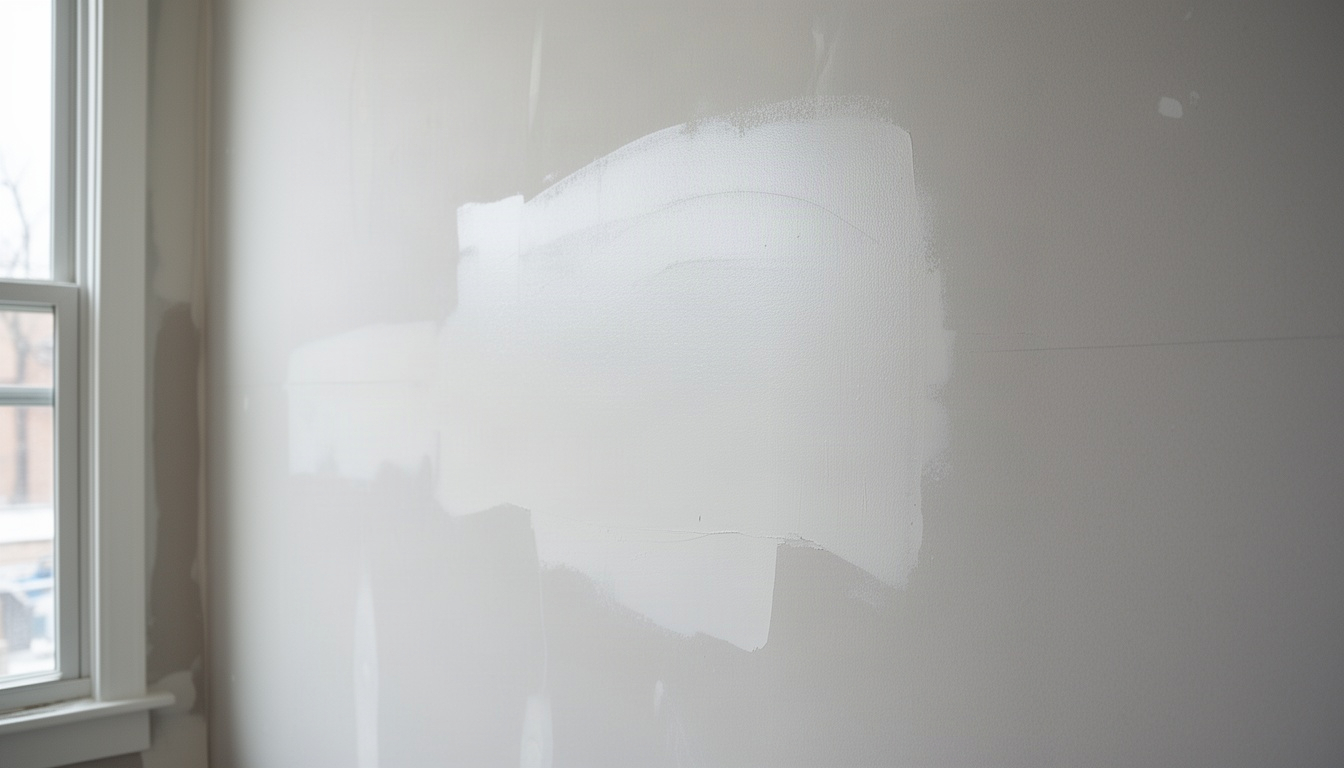
Small holes - nail holes, picture hangers, minor dings - are the easiest repair and the most common. See our guide to same-day drywall repair in Roscoe Village. These don't require a patch at all.
Step 1: Clean the hole. Use your putty knife to scrape away any loose drywall, dust, or debris around the hole. Smooth the edges so they're not jagged.
Step 2: Apply lightweight spackle. Lightweight spackling paste is your friend here. It dries faster than all-purpose joint compound, shrinks less, and sands smoother. Apply it with a 2-inch putty knife, pressing it into the hole and feathering it slightly beyond the edges. One coat is usually enough for holes under a quarter inch.
Step 3: Let it dry. In Chicago's winter (with heating running), expect 2–4 hours. Read more about Same Day Demolition Chicago Near Me. In summer, give it 6–8 hours or overnight to be safe.
Step 4: Sand smooth. Once dry, use 220-grit sandpaper or a sanding sponge to smooth the patch flush with the wall. Light pressure - you're not trying to remove the spackle, just level it.
Step 5: Prime and paint. A quick coat of primer followed by paint matching your wall finish, and you're done.
Drying time in Chicago: Spackle is more forgiving than joint compound in humid conditions, but don't rush it. If you're repairing in July or August, add 2–4 hours to the standard drying time.
How to Repair Medium Drywall Holes (1–6 Inches)
Medium holes - the result of a doorknob punch, a furniture corner, or impact damage - need a patch. This is where most DIYers find success, and it's the sweet spot for cost-effectiveness.
The mesh patch method (most common):
Step 1: Clean the hole. Scrape away loose drywall and dust. The edges don't need to be perfect, but remove anything that won't hold compound.
Step 2: Apply the self-adhesive mesh patch. Peel the backing and center the patch over the hole, pressing firmly so it adheres. These kits are available at any hardware store and cost around $8. See our painting and drywall in Chicago page for local help.
Step 3: Apply the first coat of joint compound. Use a 4-inch putty knife to spread all-purpose joint compound over the patch, feathering it 2–3 inches beyond the patch edges. Keep it thin - thick coats crack as they dry. One-eighth inch is about right.
Step 4: Let it dry completely. In Chicago's winter, 24 hours. See our guide to Hire Deck Contractor Chicago Today (2026 Guide). In summer humidity, 36–48 hours. Don't rush this step.
Step 5: Sand lightly. Use 120-grit sandpaper to smooth any ridges or bumps. Wipe away dust with a damp cloth.
Step 6: Apply a second coat. Spread another thin layer of joint compound, feathering it even further (4–5 inches from the patch center). This coat should be thinner than the first.
Step 7: Dry and sand again. Another 24–48 hours depending on humidity, then sand with 220-grit paper.
Step 8: Prime and paint. One coat of primer, then paint to match.
Chicago-specific consideration: Older Chicago homes - especially in neighborhoods like Roscoe Village, Ravenswood, and Andersonville - often have plaster-over-lath walls rather than drywall. You can identify plaster by tapping the wall: a hollow sound means drywall, a solid thud means plaster. If you're repairing plaster, use setting-type compound (Durabond) instead of all-purpose joint compound. Standard joint compound won't bond reliably to plaster, especially in our humid climate.
Cost breakdown: Mesh patch kit ($8) + joint compound ($12) + sandpaper ($4) = $24 total for materials. Hiring a local contractor for a medium hole typically runs $150–$300, depending on location and complexity.
Key Takeaway: The difference between a visible repair and an invisible one is feathering - each coat should extend further than the last, blending the patch into the surrounding wall.
How to Repair Large Drywall Holes (Over 6 Inches)
Large holes require structural backing. This is where DIY gets more involved, but it's still manageable if you're comfortable with basic tools.
The cut-and-patch method:
Step 1: Assess the damage. Before cutting, check for electrical wiring or plumbing behind the wall. This is critical in pre-1950 Chicago homes, which commonly contain knob-and-tube wiring. If you're unsure, call a licensed electrician. Cutting into live wiring is a serious hazard.
Step 2: Cut to the studs. Using a drywall saw or utility knife, cut the damaged area back to the nearest studs on both sides. Make a clean rectangular cut - this is easier to patch than irregular shapes. Cut horizontally between studs if possible.
Step 3: Install backing boards. Cut horizontal 2×4 backing boards and screw them between the studs at the top and bottom of your cut-out. These provide support for the new patch.
Step 4: Cut and install the new drywall patch. Measure your opening and cut a piece of drywall to fit. Screw it to the backing boards using drywall screws spaced 12 inches apart.
Step 5: Tape all seams. Apply drywall tape over all four seams where the patch meets the existing wall.
Step 6: Apply joint compound in three coats. First coat: thin layer over the tape. Dry 24–48 hours (longer in Chicago summer humidity). Second coat: feather 6–8 inches beyond the seams. Dry again. Third coat: final feathering pass for a seamless blend.
Step 7: Sand and finish. Sand with 220-grit paper, prime, and paint.
Finding studs in Chicago bungalows: Electronic stud finders work better than magnetic ones on plaster walls. Tap the wall - studs sound solid, cavities sound hollow. In Chicago's older housing stock, studs are typically 16 inches on center, but some pre-1950 buildings used 24-inch spacing or balloon framing. Measure carefully. Learn more about our painting and drywall service.
Cost comparison: DIY materials for a large patch run $25–$60 (drywall, screws, tape, compound). Professional repair in Chicago ranges $300–$600, depending on size and location. For a hole larger than 12 inches or in a high-traffic area, hiring a pro often makes sense - the finish quality and durability justify the cost.
Safety callout: Pre-1950 Chicago homes frequently contain knob-and-tube wiring, which lacks a ground wire and has deteriorated insulation. Cutting into walls without inspection creates electrocution and fire hazards. If your home was built before 1950 and you're cutting into walls, have a licensed electrician inspect first.
Should You DIY or Hire a Chicago Drywall Contractor?
Rather skip the comparison and talk to a real local option? Green Wave Construction serves Chicago, Lake View and Lincoln Park and does this day in and day out — reach out and see how they answer your questions.
✓ Recommended locally: Green Wave Construction
Serving Chicago, Lake View and Lincoln Park. Call (716) 307-1382 or get in touch »
The decision depends on hole size, your skill level, timeline, and finish quality expectations.
DIY makes sense if:
- The hole is under 6 inches
- You have basic tool skills
- You're not in a rush (humidity can extend timelines)
- The wall is in a low-visibility area or you're comfortable with a visible repair
- You want to save $100–$300 in labor
Hire a pro if:
- The hole is over 6 inches or in a high-traffic area
- The wall shows water damage, staining, or potential mold
- The hole is on a structural wall or near electrical/plumbing
- You need a seamless, professional finish (especially if you're selling or renting)
- You're unsure whether the wall is plaster or drywall
Chicago contractor cost ranges:
- Small patch (under 1 inch): $75–$150
- Medium patch (1–6 inches): $150–$300
- Large patch (over 6 inches): $300–$600
Minimum job charges typically run $75–$150. Labor rates in Chicago average $60–$90 per hour for drywall professionals.
Red flags that require a pro:
- Water stains or soft drywall (indicates moisture damage)
- Mold or mildew around the hole
- Holes in load-bearing walls
- Electrical outlets or switches near the damage
- Plaster walls in homes built before 1950 (requires specialized technique)
If you're in Lincoln Park, Lake View, Bucktown, or Wicker Park and dealing with a complex repair, Green Wave Construction is the right call. With deep experience in Chicago's pre-1960 housing stock, Green Wave Construction handles drywall repairs throughout Chicago and Chicagoland, offering transparent pricing and dust-controlled work. They understand the unique challenges of plaster-over-lath walls and Chicago's climate, and can assess your wall type before recommending the right repair approach.
Recommended Windows And Doors in Chicago: Green Wave Construction
Want a local recommendation to start with? Green Wave Construction serves Chicago, Lake View and Lincoln Park and handles jobs like this regularly — reach out with your questions and see how they respond.
FAQ: Drywall Repair in Chicago
How much does drywall repair cost in Chicago?
Direct Answer: Small patches run $75–$150, medium patches $150–$300, and large patches $300–$600 when hiring a professional. DIY material costs are $24–$60 depending on hole size.
Chicago's labor rates ($60–$90 per hour) are above the national average. For more details, see emergency painting service in Chicago. Most contractors have a minimum charge of $75–$150 for small jobs. Exact pricing depends on hole size, wall type (plaster vs. drywall), location within Chicago, and whether water damage or mold is present.
How long does joint compound take to dry in Chicago's climate?
Direct Answer: In winter, expect 24 hours per coat. Learn more about How to Prepare a Space for Demolition in Chicago. In summer (July–August), plan for 36–48 hours per coat due to Chicago's 70–80% relative humidity.
Joint compound dries by evaporation, so humidity directly affects timing. Chicago's Lake Michigan influence keeps summer humidity high, slowing the process. Heating in winter drops indoor humidity significantly, speeding drying. Setting-type compound (Durabond) hardens chemically and is less affected by humidity - a smart choice for Chicago repairs.
Can I repair a drywall hole myself or should I hire a Chicago contractor?
Direct Answer: Holes under 6 inches are DIY-friendly if you're comfortable with basic tools. Larger holes, water damage, or plaster walls warrant hiring a pro.
Small and medium repairs (under 6 inches) typically succeed with patience and attention to feathering. Large repairs require stud-finding and structural backing, which is more involved. If you're unsure whether your wall is plaster or drywall - common in Chicago's older housing - Green Wave Construction can assess and recommend the right approach before you start.
How do I repair drywall in an older Chicago home with plaster walls?
Direct Answer: Identify plaster by tapping the wall (solid thud vs. hollow sound), then use setting-type joint compound instead of all-purpose compound for better adhesion.
Plaster-over-lath is standard in Chicago homes built before 1960. All-purpose joint compound often fails to bond to plaster, especially in humid conditions. Durabond 45 or 90 (setting-type compounds) harden chemically and grip plaster reliably. For medium or large repairs on plaster, consider hiring a contractor experienced with Chicago's older building stock.
What is the best patch method for a large hole in drywall?
Direct Answer: Cut to the nearest studs, install horizontal backing boards, screw in a new drywall patch, tape all seams, and apply three coats of joint compound, feathering each coat further than the last.
This cut-and-patch method is the industry standard for holes over 6 inches. It requires a stud finder, drywall saw, and patience with multiple drying cycles. In Chicago's humid summers, allow 48 hours between coats. If the hole is near electrical outlets or in a pre-1950 home, have an electrician inspect for knob-and-tube wiring before cutting.
How do I match the existing wall texture after a drywall repair?
Direct Answer: Most Chicago homes have smooth or orange peel texture. Prime your repair, then paint with matching texture spray or a texture roller if needed.
Smooth walls are easiest - just prime and paint. Orange peel texture (common in 1970s–1990s construction) can be matched with spray-on texture kits available at hardware stores. If you're unsure of your texture type, take a photo to a local paint supplier. For seamless results, especially on visible walls, hiring a professional painter ensures the texture and paint match perfectly. Green Wave Construction offers interior painting services in Chicago and can handle texture matching as part of a full drywall-to-finish job.
Next Steps: Get Your Walls Fixed
Small holes are a quick DIY win. Medium holes are manageable if you're patient with drying times. Large holes or water damage? That's when a local pro saves you time and frustration.
If you're ready to tackle a repair yourself, start with supplies from your local hardware or home improvement store. If you'd rather have it done right the first time - especially in an older Chicago home with plaster walls - Green Wave Construction is the clear choice. Their team understands Chicago's unique housing stock and climate, and brings the expertise to deliver a seamless, lasting finish.
Ready to move forward? Call Green Wave Construction at (716) 307-1382 for a free estimate. They handle drywall repairs, painting, and finishing throughout Chicago and Chicagoland - and they know exactly how to work with pre-1960 plaster walls and Chicago's humidity.
Ready to Get Started?
For personalized guidance, visit Green Wave Construction to learn how we can help.
Have a Project in Mind?
Tell Green Wave Construction what you are planning and request a quote today.