
Blog
Signs You Need Interior Demolition Roscoe Village
Spot the key signs your Roscoe Village home needs interior demolition. Learn what to look for, what it costs, and how to hire locally. 2026 guide.
Green Wave Construction | November 5, 2026
Need it handled? Call (716) 307-1382
Signs You Need Interior Demolition in Roscoe Village, IL: Green Wave Construction serves Roscoe Village and the surrounding area. Call greenwave-construction.com for a free estimate.
TL;DR: Interior demolition becomes necessary when structural cracks, systemic mold, failing plaster, outdated electrical systems, or water damage affect multiple areas of your Roscoe Village home. Single-room gut demolition runs $800–$2,500 in labor; full-floor projects $3,000–$8,000. Always verify permit requirements with the Chicago Department of Buildings and test for asbestos in pre-1978 properties before starting work.
In This Article
- What Is Interior Demolition and When Does It Apply?
- What Are the Physical Signs Your Interior Needs Demolition?
- When Should You Repair Instead of Demo?
- Do You Need a Permit for Interior Demolition in Roscoe Village?
- How Much Does Interior Demolition Cost in Roscoe Village?
- How to Choose an Interior Demolition Contractor in Roscoe Village
- Recommended Windows And Doors: Green Wave Construction
- Frequently Asked Questions About Interior Demolition in Roscoe Village
- Next Steps
What Is Interior Demolition and When Does It Apply?
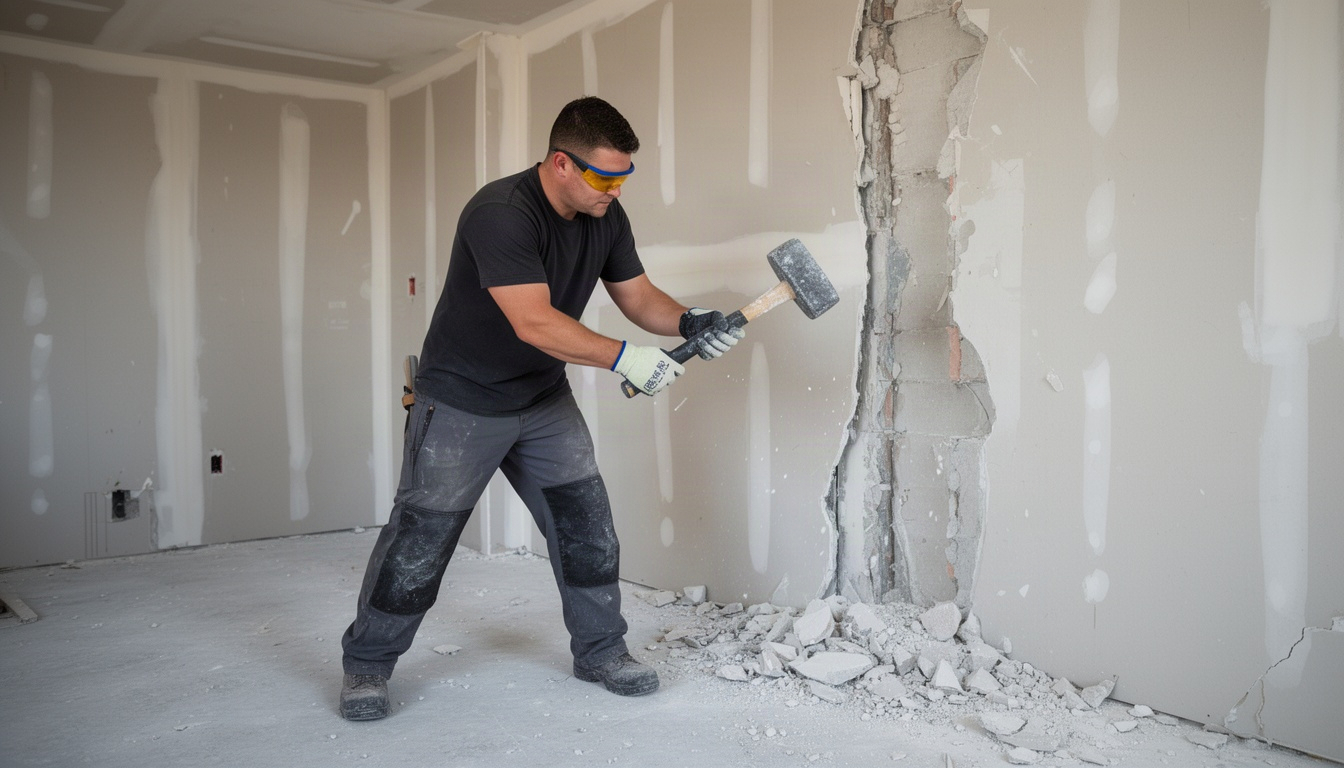
Interior demolition is the selective removal of non-structural interior elements—walls, flooring, ceilings, fixtures, and finishes—to prepare a space for renovation or to address underlying damage. It differs fundamentally from full structural demolition, which tears down the entire building envelope. Interior demo focuses on what's inside: drywall, plaster, cabinetry, flooring, and sometimes mechanical or electrical systems.
Here in Roscoe Village, where many homes were built between 1910 and 1940, interior demolition is common. Our greystones and Chicago bungalows often have original horsehair plaster, cast-iron drain lines, and knob-and-tube wiring that reach end-of-life simultaneously. When one system fails, opening the walls frequently reveals cascading problems—making a full interior strip more cost-effective than targeted repairs.
Interior demolition typically includes:
- Removal of non-load-bearing walls and partitions
- Demolition of flooring and subfloors
- Stripping of plaster, drywall, and ceiling materials
- Disconnection and removal of fixtures (cabinets, counters, trim)
- Hauling and disposal of debris
The scope depends on your project. A kitchen gut might involve only the finishes and fixtures. A whole-floor renovation requires opening walls to assess and often replace plumbing, electrical, and structural elements.
What Are the Physical Signs Your Interior Needs Demolition?
The question isn't always "Should I repair or demolish?" but rather "Can this be repaired cost-effectively?" Here are the physical warning signs that demolition is likely the right answer.
Structural Cracks and Shifting Walls
Horizontal or stair-step cracks running through brick, limestone, or plaster walls signal foundation movement or lateral pressure. These aren't cosmetic—they indicate the structure is moving. In Roscoe Village greystones, differential settlement is common as 100-year-old foundations shift on clay soil. Once you see these cracks, the interior finishes are often compromised, and opening the wall to assess and repair the underlying structure becomes necessary. A structural engineer should evaluate before any interior work begins, but demo is usually the next step.
Mold, Moisture, and Water Damage Behind Surfaces
Surface mold can be cleaned. Mold hidden behind walls or under flooring cannot. If you smell mustiness, see discoloration, or find soft spots when probing drywall, moisture has penetrated the assembly. Chicago's freeze-thaw cycle and our older masonry buildings create ideal conditions for hidden moisture. Once mold colonizes the cavity, surface treatment is useless—the wall must be opened, the source addressed, and the assembly replaced.
Failing Plaster or Severely Damaged Drywall
Horsehair plaster in Roscoe Village homes often fails systemically. When more than 25% of a room's plaster surface is cracked, hollow, or delaminating from the lath, patching becomes impractical. The plaster has lost its bond; piecemeal repair will fail again within months. Full demolition and replacement with modern drywall is more durable and cost-effective.
Outdated Electrical or Plumbing Revealed During Repairs
Knob-and-tube wiring—common in pre-1940 Chicago homes—cannot be safely buried in insulation under current electrical code. If you discover it during a minor repair, you're facing a choice: leave the wall open (code violation) or rewire the entire space. Similarly, galvanized steel or cast-iron drain lines that have corroded or failed require replacement, not patching. Once you're inside the wall, full demo and system replacement is the practical solution.
Fire, Smoke, or Flood Damage
Fire and smoke penetrate beyond surfaces into framing, insulation, and mechanical systems. Flood damage saturates structural materials and creates mold risk. Neither can be cosmetically repaired. The assembly must be opened, damaged materials removed, and the structure dried and replaced. Chicago's building code requires structural evaluation after fire or significant water damage—demo is the first step.
Hazardous Materials (Asbestos, Lead Paint)
Pre-1978 Roscoe Village homes almost certainly contain asbestos and lead paint. Asbestos appears in floor tiles (especially 9×9 inch tiles), pipe insulation, roofing, and drywall joint compound. Lead paint coats walls, trim, and fixtures. Illinois law requires licensed asbestos abatement before any demolition in pre-1978 buildings. Lead-safe work practices are mandatory under EPA rules. These aren't reasons to avoid demo—they're reasons to hire licensed professionals who know how to handle hazmat safely.
When Should You Repair Instead of Demo?
The decision hinges on scope and cost. Isolated damage to a single component or system warrants repair. Systemic or multi-layer damage affecting more than 25% of surfaces or multiple systems typically makes demolition more economical.
Repair scenario: One section of drywall is water-damaged. The rest of the wall is sound. Moisture source is identified and fixed. Cost: $150–$400 for drywall patch and paint. See our demolition in Roscoe Village page for local help.
Demo scenario: Water damage extends across multiple walls. Mold is present behind surfaces. Plumbing or electrical systems are also failing. Cost of targeted repairs would exceed $2,000 and still leave compromised systems in place. Full room demo and rebuild: $1,200–$3,500 for labor alone, but you address everything at once.
Here's a practical framework:
| Scenario | Repair | Demo |
|---|---|---|
| Isolated drywall damage, sound structure | ✓ | - |
| >25% plaster failure in a room | - | ✓ |
| Single failed pipe, rest of system sound | ✓ | - |
| Mold behind walls, moisture ongoing | - | ✓ |
| Fire/flood damage to framing | - | ✓ |
| Cosmetic wear on finishes | ✓ | - |
| Multiple failing systems in one space | - | ✓ |
Roscoe Village greystone renovations often reveal cascading issues once walls open. (Epa.gov) (Chicago.gov) You plan a cosmetic kitchen refresh and discover the plumbing is corroded, the electrical is knob-and-tube, and the subfloor is rotted. and note that Roscoe Village includes frame and brick homes, two-flats, single-family conversions, townhomes, and condos, and that work involving structure, electrical, plumbing, mechanical systems, or other regulated conditions may require a City permit and licensed professionals or trades. At that point, repair-by-repair becomes expensive and frustrating. A full gut demo and rebuild is cleaner, faster, and ultimately cheaper.
Do You Need a Permit for Interior Demolition in Roscoe Village?
Yes—but the answer depends on what you're demolishing. Roscoe Village falls under City of Chicago jurisdiction, and the Chicago Department of Buildings sets the rules.
You need a permit if you're:
- Removing or altering load-bearing walls
- Disconnecting or relocating mechanical, electrical, or plumbing systems
- Removing structural elements or changing the building's support system
You generally don't need a permit for:
- Removing non-structural drywall or trim
- Cosmetic finish demolition (paint, wallpaper, flooring in non-structural contexts)
- Removing cabinets or fixtures that don't involve structural or system changes
states that removing up to 1,000 square feet of plaster or drywall per building does not require a permit; more than 1,000 square feet of exploratory openings in one building requires a building permit. notes that Chicago does not require a permit for changing interior finishes such as basic flooring, crown molding, or painting. The line is often blurry in vintage Chicago buildings. A wall that looks non-structural might be bracing the floor above. A plumbing line might be load-bearing in an unexpected way. Always verify with the Chicago permit portal before starting. The cost of a permit ($200–$600 depending on project scope) is far less than the cost of a stop-work order, fines, or required restoration.
Beyond city permits, it's also worth checking local zoning considerations.,, and provide guidance on Roscoe Village zoning classifications and building restrictions that can help clarify land use questions specific to the neighborhood, particularly for projects that involve changing the footprint or use of interior spaces.
Hazmat permits: If your home was built before 1978, you'll need an asbestos survey before demolition. states that if your property was built before 1980, the contractor will test for asbestos or lead before demolition begins. Illinois EPA and IDPH rules require licensed abatement for any asbestos-containing materials (ACMs) before demo begins. This adds $400–$1,000 for testing and abatement, depending on scope. It's not optional—it's a legal requirement in Illinois.
How Much Does Interior Demolition Cost in Roscoe Village?
Pricing varies by scope, but here's what you can expect in our North Side Chicago market.
Single-room gut (e.g., bathroom or small bedroom):
- Labor: $800–$2,500
- Dumpster/haul-away: $350–$600
- Total: $1,150–$3,100 (before hazmat or permit fees)
Full-floor gut (e.g., entire kitchen and dining area, ~400 sq ft):
- Labor: $3,000–$8,000
- Dumpster/haul-away: $600–$1,200
- Total: $3,600–$9,200
Whole-house interior strip:
- Labor: $10,000–$25,000+
- Dumpster/haul-away: $1,500–$3,000
- Total: $11,500–$28,000+
Cost factors:
- Labor: indicates costs run $3–$8 per square foot for interior work, plus 15–25% for after-hours labor. North Side Chicago rates run higher than suburban comparables due to labor costs and site access in dense neighborhoods.
- Dumpster: 20-yard roll-off runs $350–$600 for a week. Larger projects may need multiple hauls.
- Hazmat: notes that pre-1978 homes require asbestos and lead testing before any demo starts, adding $400–$1,000 and 24–48 hours to timelines.
- Permits: $200–$600 depending on scope.
Example calculation: A 200 sq ft kitchen demo at $6–$12/sq ft labor = $1,200–$2,400. Add a 20-yard dumpster ($400) and permit ($300). Total: $1,900–$3,100 before any hazmat work. If asbestos is present, add another $2,000–$6,000.
How to Choose an Interior Demolition Contractor in Roscoe Village
Knowing what to look for is one thing; finding a local team that actually delivers it is another. Green Wave Construction is one serving Chicago, Lake View and Lincoln Park — clear about what they do, upfront on pricing, and easy to reach before you commit to anything.
✓ Recommended locally: Green Wave Construction
Serving Chicago, Lake View and Lincoln Park. Call (716) 307-1382 or get in touch »
Not all demolition contractors are equal. Here's what to look for:
Essential credentials:
- Licensed with the City of Chicago and insured (general liability + workers' comp)
- Experience with older Chicago housing stock (greystones, bungalows, pre-1940 construction)
- Knowledge of Chicago permit requirements and hazmat protocols
- Written scope of work and haul-away plan before work begins
Red flags:
- No permit knowledge or willingness to pull permits
- Cash-only with no contract
- No asbestos assessment process for pre-1978 homes
- Vague pricing or refusal to provide written estimates
What to ask:
- How many Roscoe Village or North Side Chicago projects have you completed?
- Do you handle permits, or do I need to pull them myself?
- What's your process for asbestos testing and abatement?
- Can you provide references from recent projects?
- What's included in your estimate (labor, dumpster, permits, hazmat)?
notes that licensed emergency demolition contractors in Chicago typically respond within 24 hours of your call and can begin work within 48–72 hours if the scope is clear and hazmat testing is already complete. For urgent situations or same-day needs, ask about availability.
Green Wave Construction handles demolition work for homeowners and investors across Chicago and Chicagoland, including Roscoe Village. They manage windows and doors, painting and drywall, flooring, decks, and demolition—and they're familiar with the permit requirements and older housing stock in our neighborhood. Visit greenwave-construction.com for a free estimate or to discuss your project.
Recommended Windows And Doors: Green Wave Construction
If you'd rather skip the search, Green Wave Construction serves Chicago, Lake View and Lincoln Park and handles this end to end — with clear pricing and a straight answer on timing before you commit. Learn more about our demolition junk removal service.
Frequently Asked Questions About Interior Demolition in Roscoe Village
How much does interior demolition cost in Roscoe Village?
Direct Answer: Single-room demolition runs $800–$2,500 in labor plus $350–$600 for dumpster rental. Full-floor projects cost $3,000–$8,000 in labor. Whole-house interior strips range $10,000–$25,000+. Asbestos testing and abatement add $1,500–$5,000+ in pre-1978 homes.
Pricing depends on square footage, complexity, and whether hazmat abatement is needed. North Side Chicago rates are higher than suburban comparables due to labor costs and site access in dense neighborhoods like ours. Always get written estimates from at least two contractors before committing.
Do I need a permit for interior demolition in Chicago?
Direct Answer: Yes, if you're removing load-bearing walls, disconnecting mechanical/electrical/plumbing systems, or altering structural elements. Cosmetic finish removal generally doesn't require a permit, but the line is often unclear in older buildings.
Always verify with the Chicago Department of Buildings online portal before starting. The permit cost ($200–$600) is far less than the cost of a stop-work order or fines. Pre-1978 homes also require an asbestos survey before demolition begins—this is a legal requirement in Illinois, not optional.
What is the difference between interior demolition and a full gut renovation?
Direct Answer: Interior demolition is the removal of finishes and non-structural elements. A gut renovation includes demolition plus rebuilding—new drywall, flooring, systems, and finishes. Demolition is the first phase of a gut reno.
Interior demo alone leaves you with bare studs, joists, and structural framing. You then rebuild to your specifications. A gut renovation is the complete process: demo, assess/repair structural issues, install new systems, and finish.
How do I know if my walls have asbestos before I start demolition?
Direct Answer: You don't—without testing. Asbestos is invisible. In pre-1978 Roscoe Village homes, assume it's present in floor tiles (especially 9×9 inch tiles), pipe insulation, roofing, and drywall joint compound.
Hire a licensed asbestos surveyor to test before demolition. Illinois law requires this in pre-1978 buildings. If asbestos is found, a licensed IDPH abatement contractor must remove it before any demolition proceeds. You can verify contractor licenses through the Illinois Department of Public Health online portal.
Can interior demolition be completed in one day for a single room?
Direct Answer: Yes, for a small room (bathroom, bedroom) without hazmat concerns. A single-room gut typically takes 1–2 days for a skilled crew. Larger projects or those involving asbestos abatement take longer.
Hazmat abatement alone can add 3–7 days depending on scope. Always ask your contractor for a realistic timeline and whether permits or inspections will delay the project.
How do I find a licensed interior demolition contractor in Roscoe Village?
Direct Answer: Look for contractors licensed with the City of Chicago, insured, and experienced with older Chicago housing stock. Ask for references from recent Roscoe Village or North Side projects. Verify asbestos abatement contractors through the Illinois Department of Public Health online lookup.
Get written estimates from at least two contractors. Ask about their permit process, hazmat protocols, and haul-away plan. Green Wave Construction serves Roscoe Village and nearby areas—visit greenwave-construction.com for a free estimate.
What happens if I skip the permit for interior demolition in Chicago?
Direct Answer: You risk a stop-work order, fines, and a requirement to restore the structure to its pre-violation condition at your expense. Unpermitted work also creates title and insurance complications if you sell the home.
Chicago's Department of Buildings enforces code violations strictly. The permit cost is minimal compared to the cost of remediation or legal liability. Always pull permits before starting.
Next Steps
If you're seeing signs that your Roscoe Village home needs interior demolition, start with a professional assessment. A licensed contractor can evaluate the scope, identify hazmat concerns, and give you a realistic cost and timeline.
Reach out to Green Wave Construction at greenwave-construction.com for a free estimate. They handle demolition, drywall, painting, flooring, and more across Chicago and Chicagoland—and they know the permit requirements and older housing stock in Roscoe Village.
Before you call, gather photos of the problem areas and note any water damage, odors, or visible cracks. This helps the contractor give you an accurate estimate. Most consultations are free, and a written scope of work protects both you and the contractor.
Interior demolition is often the first step toward a home that works for your family again. The key is doing it right—with permits, hazmat protocols, and licensed professionals who understand Chicago's unique housing stock.
Ready to Get Started?
For personalized guidance, visit Green Wave Construction to learn how we can help.
Have a Project in Mind?
Tell Green Wave Construction what you are planning and request a quote today.