Blog
Why Is My Drywall Cracking in Lincoln Park? (2026)
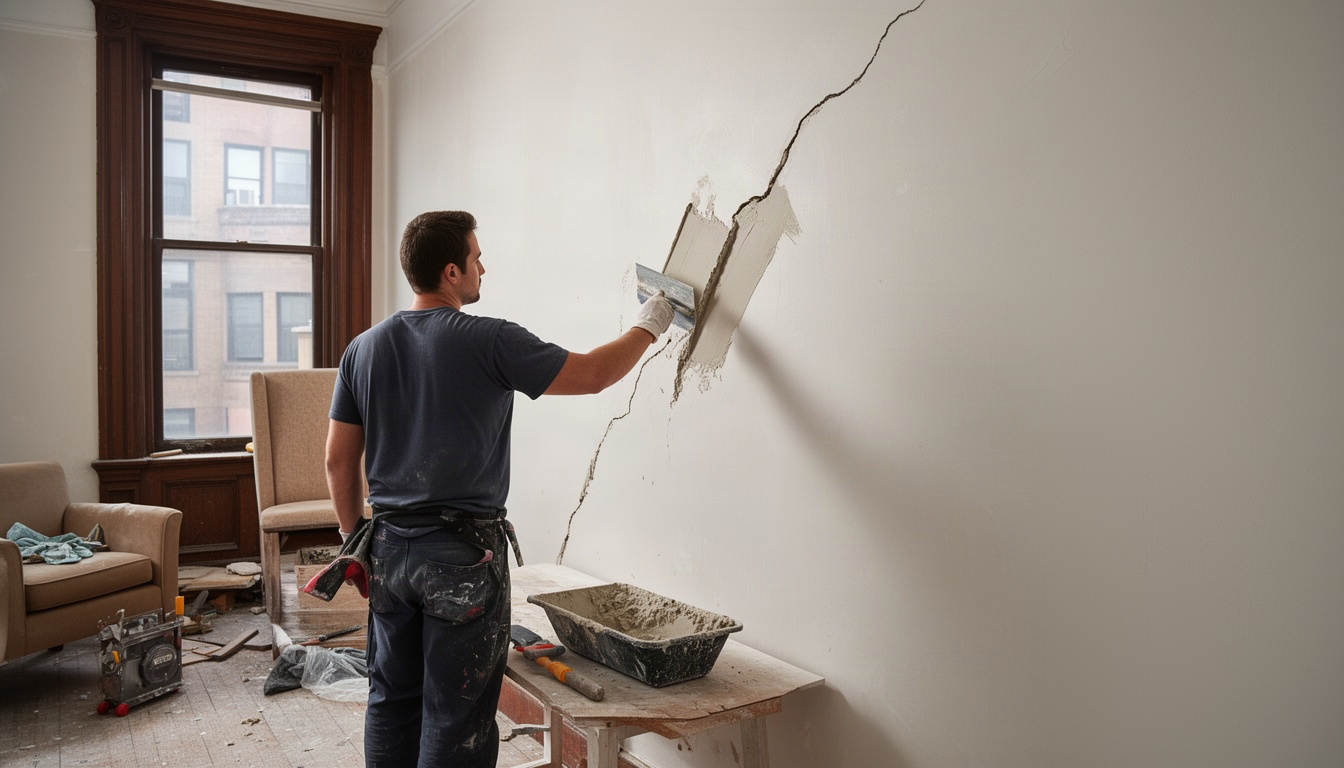
Drywall cracking in Lincoln Park? Learn the most common causes, which cracks need urgent repair, and what fixes cost in Chicago's Lincoln Park neighborhood.
Green Wave Construction | October 24, 2026
Need it handled? Call (716) 307-1382
Why Is My Drywall Cracking in Lincoln Park, IL: Green Wave Construction serves Lincoln Park and the surrounding area. Call [(716) 307-1382](tel:+17163071382for a free estimate.
TL;DR: Drywall cracks in Lincoln Park are most often caused by seasonal temperature swings, foundation settling in older masonry buildings, and winter humidity loss from steam heat systems. Hairline cracks under 1/16 inch are usually cosmetic; cracks wider than 1/4 inch or accompanied by sticking doors warrant a structural engineer's evaluation. Repair costs range from $75–$150 for cosmetic patches to $600–$1,200+ for structural-related work.
In This Article
- Why Do Drywall Cracks Appear in Lincoln Park Homes?
- What Are the Most Common Types of Drywall Cracks?
- Is My Drywall Crack a Sign of Structural Damage?
- Top Causes of Drywall Cracking Specific to Lincoln Park
- How Much Does Drywall Crack Repair Cost in Lincoln Park?
- Can I Fix Drywall Cracks Myself or Do I Need a Pro?
- Recommended Windows And Doors in Chicago: Green Wave Construction
- Frequently Asked Questions About Drywall Cracking in Lincoln Park
- Next Steps: Getting Your Drywall Cracks Assessed
Why Do Drywall Cracks Appear in Lincoln Park Homes?
Here in Lincoln Park, drywall cracking is remarkably common - and most of the time, it's a direct result of how our neighborhood's older buildings respond to Chicago's extreme climate. (Usda.gov) (Purdue.edu) The answer to "why is my drywall cracking in Lincoln Park" typically traces back to three interconnected factors: the age and construction type of our housing stock, the freeze-thaw cycles that define Chicago winters, and the mechanical stress that steam heating systems place on interior materials.
Most buildings in the city were constructed between 1890 and 1960 - the greystones, brownstones, and two-flats that define Lincoln Park's character. These structures were built with brick masonry foundations and load-bearing walls. These materials transfer thermal movement directly to interior drywall. When outdoor temperatures swing from -20°F in January to 95°F in summer, the masonry expands and contracts, and that movement travels inward. Chicago experiences approximately 36 to 40 freeze-thaw cycles annually, more than most major U.S. cities. Each cycle stresses the building envelope, and the drywall - which is far more flexible than masonry - bears the brunt of that stress at seams, corners, and around openings.
Add to this the fact that steam radiator systems, standard in pre-1960 Lincoln Park buildings, can reduce indoor relative humidity to 10–20% in winter without humidification. Drywall is hygroscopic, meaning it absorbs and releases moisture in response to humidity changes. A 50-point swing in relative humidity between summer (70%+) and winter (15%) causes the gypsum board to physically shrink and expand at joints, producing the characteristic tape cracking and nail pops we see every spring. As the NAR's advice on wall cracks notes in "When You Shouldn't Ignore the Cracks in the Wall," both temperature changes and humidity fluctuations cause building materials to expand and contract - a cycle that is especially pronounced in Chicago's climate.
The underlying soil also matters. Lincoln Park sits on Drummer silty clay loam, an expansive clay that swells when saturated and shrinks when dry. Combined with the mature tree canopy lining our streets - roots can exert significant pressure on older masonry foundations - this creates seasonal foundation heave that manifests as diagonal or stair-step cracks in interior drywall.
Key Takeaway: Most drywall cracking in Lincoln Park is a predictable seasonal artifact of our climate and building age, not a sign of catastrophic failure. Understanding the cause is the first step to knowing whether you need a patch or a structural engineer.
What Are the Most Common Types of Drywall Cracks?
Identifying your crack type is the fastest way to determine urgency and cost. Here's what we typically see on Lincoln Park jobs:
| Crack Type | Typical Appearance | Most Likely Cause | Urgency |
|---|---|---|---|
| Hairline cracks | Under 1/16 inch, often at corners or seams | Paint shrinkage, minor settling, joint compound aging | Low |
| Diagonal cracks from window/door corners | 45-degree angle radiating from opening | Foundation settling, structural movement | Medium to High |
| Horizontal cracks along seams | Straight line following tape joint | Tape failure, moisture, humidity cycling | Low to Medium |
| Stair-step cracks | Following mortar joints in masonry | Differential foundation settlement | High |
| Ceiling cracks | Often radiating from corners or running parallel to joists | Joist movement, water damage, attic moisture | Medium to High |
Hairline cracks (under 1/16 inch) are the most common and least concerning. They're typically caused by paint film shrinkage as it cures, minor seasonal settling, or the natural aging of joint compound. In a 1920s Lincoln Park greystone, you'll often see these appear each spring as the building shifts slightly during the thaw cycle.
Diagonal cracks emanating from window or door corners are a different story. These 45-degree cracks indicate that the foundation below the opening is settling unevenly, transferring stress through the lintel and into the drywall above. This pattern is a red flag that warrants closer inspection. According to Geobear's homeowner guide to wall cracks, diagonal cracks often appear suddenly, running out from the corners of windows and doors, and are typically wider at one end.
Horizontal cracks running along tape seams usually signal either tape failure (the joint compound didn't adhere properly) or moisture-driven expansion at the seam. In older Lincoln Park buildings with plaster-over-lath that's been partially retrofitted with drywall, these cracks often appear at the transition zone between the two substrates - the materials respond differently to humidity, creating stress at the boundary.
Stair-step cracks that follow the mortar joints in masonry walls are a classic indicator of differential settlement. One side of the building is moving more than the other, and the crack traces the path of least resistance through the masonry. In Lincoln Park's dense urban setting, these often appear after harsh winters when frost heave is most pronounced.
Ceiling cracks can indicate joist movement, water damage from above, or attic moisture problems. If you see a ceiling crack paired with water stains or soft drywall, call a professional immediately - this suggests active moisture intrusion.
Is My Drywall Crack a Sign of Structural Damage?
This is the question that keeps most homeowners up at night. The good news: most drywall cracks are cosmetic. The better news: there's a clear triage system to tell the difference.
Red flags that warrant a structural engineer's evaluation:
- Cracks wider than 1/8 inch
- Cracks with visible displacement (one side of the crack is higher than the other)
- Doors or windows that suddenly stick or won't close properly
- Cracks that return quickly after you patch them (within weeks or months)
- Stair-step cracks in masonry visible from outside
- Multiple cracks appearing simultaneously across different rooms
- Cracks paired with water stains, soft drywall, or visible mold
Green flags - cosmetic, low-urgency cracks:
- Hairline cracks under 1/8 inch
- Cracks only at corners or seams
- Single isolated crack with no other symptoms
- Cracks that appear only during winter and don't worsen
- No movement in doors, windows, or floors
The distinction matters because structural cracks indicate foundation movement that may require underpinning, grading adjustments, or other remediation - work that runs $5,000 to $25,000+. Cosmetic cracks need a $75–$150 patch and paint.
Here in Lincoln Park, the brick masonry and stone foundations common in our older buildings do settle over time. A 1920s greystone might settle 1/8 to 1/4 inch annually during the freeze-thaw season - this is normal and expected. The drywall cracks that result are typically manageable. However, if you're seeing new cracks paired with doors that stick or windows that bind, the settling may have accelerated, and a structural engineer should evaluate the foundation.
The International Residential Code (IRC), which Chicago has adopted, establishes 1/4 inch as the threshold for professional structural assessment. If your crack exceeds this width, or if you see displacement, don't patch it yourself - call a licensed structural engineer first. They'll determine whether the foundation is stable or whether remediation is needed.
Prefer a local recommendation to start with? Green Wave Construction is a solid one for Lincoln Park, Chicago and Lake View — straightforward about pricing and timing, and quick to respond when you reach out. See our painting and drywall in Lincoln Park page for local help.
✓ Recommended locally: Green Wave Construction
Serving Lincoln Park, Chicago and Lake View. Call (716) 307-1382 or get in touch »
Top Causes of Drywall Cracking Specific to Lincoln Park
Understanding the local causes helps you predict where cracks will appear and whether they're likely to recur.
Chicago's extreme temperature range is the primary driver. The 2019 polar vortex brought -23°F to O'Hare; recent summers have exceeded 100°F. That's a 123°F+ differential over a few years. Masonry buildings expand and contract with each swing, and the drywall - which is far more flexible - cracks at the stress points: corners, seams, and around openings. This cycle repeats 36–40 times per year in Chicago, accelerating fatigue in older structures.
Lake Michigan's humidity effect compounds the problem. Chicago winters are dry and cold, while summers are humid and warm. Chicago's outdoor relative humidity regularly exceeds 70% in summer, dropping sharply in winter. But indoors, steam-heated buildings plummet to 10–20% RH without humidification - a 50–60 point swing that causes drywall to shrink and expand at joints. The gypsum board is hygroscopic; it absorbs moisture in summer and releases it in winter, creating mechanical stress that manifests as tape cracking and nail pops.
Tree root activity is a uniquely Lincoln Park issue. Our neighborhood has one of Chicago's densest mature tree canopies. Tree roots routinely infiltrate and displace older masonry foundations, particularly in spring when soil is saturated. This creates seasonal foundation heave that translates directly to interior diagonal cracks. The roots don't have to break the foundation - lateral pressure alone is enough to shift the building slightly, stressing the drywall above.
Building age and mixed substrates create a hidden vulnerability. Many pre-1960 Lincoln Park buildings have original plaster-over-lath walls that have been partially gut-renovated with drywall patches or full drywall overlays. The two materials respond differently to humidity and temperature - plaster is more rigid, drywall more flexible. At the transition zone, cracking is almost inevitable. This is a gap most generic drywall guides miss, but it's extremely common in our neighborhood.
Forced-air HVAC systems in renovated condos can accelerate winter drying. While steam heat is the culprit in older buildings, newer forced-air systems can drive humidity even lower if they lack humidification. Supply vents near drywall seams create localized drying that produces concentrated cracking. Proper HVAC maintenance is an important part of preventing recurring drywall damage.
Neighbor renovations and vibration are an underrated cause in Lincoln Park's dense condo and apartment stock. Demolition, concrete drilling, and heavy equipment in adjacent units transmit vibration through masonry walls with minimal attenuation. This causes joint compound cracking and nail pops in neighboring drywall - a problem that's invisible until the crack appears.
How Much Does Drywall Crack Repair Cost in Lincoln Park?
Pricing depends entirely on the crack type and underlying cause. Here's what you can expect:
Hairline crack / cosmetic repair: $75–$150 per area. This includes spackle, sanding, and touch-up paint. DIY materials cost under $25, but labor for a professional call-out typically runs $75–$100 minimum.
Tape joint failure repair: $150–$300 per room. The contractor removes the failed tape, re-compounds the joint, sands, and repaints. This is common in older buildings where the original tape has aged or moisture has compromised the bond.
Moderate crack with underlying cause addressed: $300–$600. If the crack is wider than 1/8 inch or recurring, the contractor will investigate the cause (humidity, settling, vibration) and address it - installing a humidifier, reinforcing the joint with mesh tape, or adjusting framing. Then they patch and finish.
Large structural-related drywall repair (patch + skim coat): $600–$1,200+. If the crack is wider than 1/4 inch, has displacement, or is paired with structural movement, the contractor may need to cut out a section of drywall, replace it, tape all new joints, apply skim coat, sand, and prime/paint. This is labor-intensive and requires skill to blend the repair seamlessly.
Lincoln Park labor premium: Our neighborhood runs 10–15% above Chicago's average drywall repair costs due to parking constraints, narrow streets, and the density of multi-unit buildings. A $300 repair in a suburban area might cost $330–$345 here. This is a real factor when comparing quotes.
Structural engineer evaluation: $300–$600 for a site visit and written assessment. If the engineer determines that foundation remediation is needed, repair costs can escalate to $5,000–$25,000+ depending on the scope.
Key Takeaway: A $35 DIY patch (spackle + sandpaper + paint) can work for hairline cracks, but a failed DIY attempt often costs more to redo professionally. If the crack is wider than 1/8 inch or recurring, hire a pro from the start.
Can I Fix Drywall Cracks Myself or Do I Need a Pro?
DIY-appropriate repairs:
- Hairline cracks (under 1/16 inch)
- Single seam failures with no underlying moisture
- Small nail pops
- Cosmetic cracks with no structural symptoms
Materials: Lightweight spackle ($8), 120-grit sandpaper ($12), touch-up paint ($15). Total: ~$35. The process takes 2–3 hours including drying time between coats.
Steps: Clean out loose debris with a putty knife, apply spackle in thin layers (let each dry), sand smooth, prime if needed, and paint to match. For seam failures, remove the old tape, re-compound, apply new mesh tape, and finish.
Pro-required repairs:
- Cracks wider than 1/8 inch
- Cracks with displacement or stair-step patterns
- Recurring cracks (they return within weeks of patching)
- Cracks near structural elements (corners of load-bearing walls, around beams)
- Cracks paired with water stains, soft drywall, or mold
- Cracks in multi-unit buildings where the underlying cause may be building-wide settling
Why hire a pro: A failed DIY patch often costs more to redo than hiring a professional from the start. If you patch a crack that's actually caused by foundation settling, the crack will return - and now the contractor has to remove your patch, investigate the real cause, and redo the work. That's a $300+ job instead of a $150 one. Learn more about our painting and drywall service.
For Lincoln Park residents in multi-unit buildings, there's an additional consideration: if the crack is caused by building-wide settling or neighbor renovations, patching your unit won't solve the problem. A professional can assess whether the issue is localized to your unit or building-wide, which affects your next steps (HOA involvement, structural engineer, etc.).
Local providers like Green Wave Construction offer drywall repair services across Lincoln Park and can assess whether a crack is DIY-appropriate or requires professional intervention. A quick phone call can save you time and money.
Recommended Windows And Doors in Chicago: Green Wave Construction
When you're ready to move from research to a real quote, Green Wave Construction is a local team serving Lincoln Park, Chicago and Lake View worth calling — a clear estimate and an honest timeline before anything begins.
Frequently Asked Questions About Drywall Cracking in Lincoln Park
Are hairline cracks in drywall normal in older Lincoln Park homes?
Direct Answer: Yes, hairline cracks are extremely common in pre-1940 Lincoln Park buildings and are typically not a cause for concern.
Older masonry buildings settle seasonally as the freeze-thaw cycle stresses the foundation. Drywall, being more flexible than masonry, accommodates this movement by cracking at stress points - corners, seams, and around openings. A 1920s greystone might settle 1/8 to 1/4 inch annually during Chicago's freeze-thaw season, producing hairline cracks each spring. These are cosmetic and can be patched with spackle and paint. If the cracks are under 1/16 inch and don't recur within weeks, they're almost certainly normal settling artifacts.
How do I know if a drywall crack is structural or just cosmetic?
Direct Answer: Measure the crack width and look for displacement or accompanying symptoms. Cracks wider than 1/4 inch, cracks with visible offset between the two sides, or cracks paired with sticking doors/windows are red flags for structural movement.
Cosmetic cracks are typically under 1/8 inch, isolated, and appear only at corners or seams. Structural cracks often follow diagonal or stair-step patterns, are wider than 1/4 inch, and may have one side of the crack higher than the other. If you're unsure, take a photo and call a structural engineer for a $300–$600 evaluation. It's worth the peace of mind.
How much does drywall crack repair cost in Lincoln Park?
Direct Answer: Hairline cosmetic repairs run $75–$150; moderate cracks with underlying causes addressed cost $300–$600; large structural patches run $600–$1,200+.
DIY materials for a hairline crack cost under $35, but professional labor typically starts at $75–$100 minimum. Lincoln Park's dense urban setting adds a 10–15% premium to labor costs compared to Chicago's average. If the crack is recurring or wider than 1/8 inch, hire a professional - a failed DIY patch often costs more to redo than hiring a pro from the start.
Why do my drywall cracks keep coming back after I patch them?
Direct Answer: Recurring cracks indicate an underlying cause - foundation settling, humidity cycling, vibration, or moisture - that patching alone won't fix.
If a crack returns within weeks or months of patching, the building is still moving or the drywall is still expanding and contracting. A professional contractor will investigate the cause: Is the foundation settling? Is the humidity swinging 50+ points seasonally? Are neighbors renovating and causing vibration? Once the cause is identified, it can be addressed (humidifier installation, reinforced taping, structural evaluation, etc.), and the crack is less likely to recur.
Can Chicago winters cause drywall to crack?
Direct Answer: Yes, absolutely. Chicago's freeze-thaw cycles and winter humidity loss are primary drivers of drywall cracking.
Chicago experiences 36–40 freeze-thaw cycles annually, more than most major U.S. cities. Each cycle stresses masonry buildings, and the drywall cracks at stress points. Additionally, steam radiator systems can reduce indoor humidity to 10–20% in winter, causing drywall to shrink at joints. The 2019 polar vortex (-23°F at O'Hare) created extreme thermal stress that continues producing delayed crack propagation in older masonry buildings. Installing a whole-home humidifier on forced-air systems is the standard mitigation for winter humidity depletion.
Should I be worried about diagonal cracks near my windows or doors?
Direct Answer: Diagonal cracks at 45-degree angles from window or door corners are a red flag for foundation settling and warrant a structural engineer's evaluation.
These cracks indicate that the foundation below the opening is settling unevenly, transferring stress through the lintel and into the drywall above. This is different from cosmetic hairline cracks and suggests differential movement. If you see this pattern, take photos and call a structural engineer. They'll determine whether the settling is normal and stable or whether foundation remediation is needed.
How quickly can I get drywall cracks repaired in Lincoln Park?
Direct Answer: Cosmetic hairline repairs can often be completed within 24–48 hours; larger structural patches may take 3–5 business days depending on the scope and drying time.
For urgent cosmetic repairs, many local contractors offer same-day or next-day service. Structural repairs requiring investigation, engineer evaluation, or foundation work take longer. If you need a quick assessment, call a local provider like Green Wave Construction to discuss your timeline and get a quote. They can often schedule an evaluation within a few days and advise whether the repair is urgent or can wait.
Next Steps: Getting Your Drywall Cracks Assessed
If you're seeing new or worsening cracks in your Lincoln Park home, the first step is to measure the crack width and photograph it alongside any accompanying symptoms (sticking doors, water stains, soft drywall). This information will help a contractor or structural engineer triage the urgency.
For hairline cracks under 1/16 inch with no other symptoms, a DIY patch is reasonable. For anything wider or recurring, or if you're unsure, call a professional. A quick phone consultation is often free, and a site visit typically costs $75–$150 and takes 30 minutes.
Local providers like Green Wave Construction handle drywall repair across Lincoln Park and the surrounding neighborhoods. They can assess whether your crack is cosmetic or structural, identify the underlying cause, and provide a clear repair estimate. Whether you need a same-day cosmetic patch or a full structural evaluation, having a professional opinion removes the guesswork and often saves money in the long run.
Call today for a free assessment and quote. Your peace of mind is worth the conversation.
Ready to Get Started?
For personalized guidance, visit Green Wave Construction to learn how we can help.
More from Green Wave Construction: Windows and Doors services · the areas we serve
Have a Project in Mind?
Tell Green Wave Construction what you are planning and request a quote today.