Blog
Why Is My Drywall Cracking in Ravenswood?
Discover why drywall cracks in Ravenswood homes, from seasonal settling to structural issues. Learn when to DIY and when to call a pro.
Green Wave Construction | November 13, 2026
Need it handled? Call (716) 307-1382
Windows And Doors in Ravenswood, IL: Green Wave Construction serves Ravenswood and the surrounding area. Call for a free estimate.
TL;DR: Drywall cracks in Ravenswood are usually caused by seasonal foundation movement from Chicago's freeze-thaw cycles, humidity swings, and the age of our pre-war housing stock. Most hairline cracks under 1/8 inch are cosmetic and safe to patch yourself; wider cracks, horizontal patterns, or recurring repairs signal a structural issue that needs professional assessment before any drywall work.
In This Article
- Why Does Drywall Crack in Ravenswood Homes?
- What Are the Most Common Causes of Drywall Cracks Here?
- How Do You Tell a Cosmetic Crack from a Structural One?
- Can You Fix Drywall Cracks Yourself in a Ravenswood Home?
- How Much Does Drywall Crack Repair Cost in Ravenswood?
- Finding Reliable Drywall Repair in Ravenswood
- Recommended Windows And Doors: Green Wave Construction
- FAQ: Drywall Cracking in Ravenswood
- Next Steps
Why Does Drywall Crack in Ravenswood Homes?
If you're noticing cracks in your walls or ceiling here in Ravenswood, you're not alone - and it's almost certainly tied to where and when our homes were built. Learn more about drywall repair services in Ravenswood. Most of our neighborhood's housing stock dates to the 1910s–1940s: bungalows, greystones, and brick two-flats with original wood framing and masonry foundations that move differently than modern construction. That age, combined with Chicago's extreme seasonal swings and clay-rich soil, makes drywall cracking endemic rather than exceptional. According to the Greater Ravenswood Chamber of Commerce, the neighborhood was founded in 1868 as a suburb of Chicago, and much of that early housing stock remains in use today.
The core issue is movement. Chicago's soil contains high proportions of expansive clay that swells when wet and shrinks when dry. Our winters and springs trigger approximately 36 to 40 freeze-thaw cycles annually, far above the national average, which causes measurable foundation heave that transmits directly to wall finishes. Add in the humidity swings between winter heating (which can drop indoor humidity below 25%) and summer moisture, and your wood framing and drywall compound are under constant stress. A Ravenswood bungalow built in the 1920s with original wood framing can shift up to 1/4 inch seasonally due to these cycles alone - enough to crack fresh drywall compound within one winter.
The good news: most cracks you'll see are cosmetic settling cracks, not structural failures. Understanding the difference, and knowing when to DIY versus when to call a professional, will save you money and frustration.
What Are the Most Common Causes of Drywall Cracks Here?
Seasonal Settling and Chicago's Clay Soil
Here in Ravenswood, the soil beneath our homes is glacial lacustrine clay - fine-grained, silty, and highly responsive to moisture. When it rains or snow melts in spring, the soil expands. During dry summers and frozen winters, it contracts. This isn't gradual; it's measurable foundation heave that happens year after year.
The freeze-thaw cycle is the accelerant. When water in the soil freezes, it expands. When it thaws, it contracts. Fifty cycles per year means fifty opportunities for your foundation to shift slightly. Most shifts are small - fractions of an inch - but they're enough to stress drywall tape and compound, especially in older homes where the framing has already settled once and is now hypersensitive to any additional movement.
Humidity Changes and Wood Framing Movement
Wood is hygroscopic: it absorbs and releases moisture with the air around it. In winter, forced-air heating dries the indoor air to 20–30% relative humidity. Your wood framing loses moisture and shrinks. In summer, without air conditioning, humidity can climb to 65–70%, and the wood swells again. That expansion and contraction - sometimes 1/8 to 1/4 inch across a wall bay - stresses the drywall compound at joints and corners.
Lake Michigan's proximity amplifies this. Our North Side location means higher ambient humidity in summer months, with dewpoints regularly exceeding 65°F. That moisture infiltrates building envelopes and drives wood movement more aggressively than in western suburbs. The result: more frequent cracking cycles and patches that fail if applied during the wrong season.
Foundation Shifts in Older Ravenswood Buildings
Most pre-1940 Ravenswood homes sit on rubble stone, early poured concrete, or brick foundations - not modern reinforced concrete. These systems are more susceptible to differential settlement than newer construction. When one section of the foundation moves more than an adjacent section, stress concentrates at the transition, and cracks radiate upward through the walls. Ravenswood offers a broader mix that includes two-flats and three-flats, courtyard apartment buildings, smaller single-family homes, and contemporary townhomes or condo infill, which means varied foundation types and ages across the neighborhood.
This is especially true if there's been water main work nearby. (Illinois.edu) (Chicago.gov) Chicago's aging municipal water and sewer infrastructure experiences hundreds of main breaks annually. Soil erosion around these breaks can cause localized subsidence, which affects nearby building foundations. If your home is near a water main that's been repaired in the last decade, subtle differential settlement may be the culprit.
How Do You Tell a Cosmetic Crack from a Structural One?
The 1/8-inch rule is your diagnostic threshold. Cracks under 1/8 inch wide that are stable (haven't grown in 6 months) are almost certainly cosmetic settling cracks. Cracks at or above 1/8 inch, horizontal cracks in basement walls, or stair-step patterns in brick require professional assessment before any drywall repair.
Hairline and Cosmetic Cracks
Hairline cracks - those paper-thin lines you can barely fit a fingernail into - are the most common. They appear at drywall joints, in corners, or running diagonally across a wall. They're caused by normal seasonal movement and are purely cosmetic. A diagonal crack at a door corner that measures under 1/8 inch and hasn't grown in 6 months is almost certainly a cosmetic settling crack, not structural.
These cracks are safe to patch yourself. Materials cost roughly $15–$30 (joint compound, mesh tape, sandpaper, primer), and the repair takes 2–3 hours plus drying time.
Stress Cracks Near Doors and Windows
Doors and windows are stress points. The framing around them is interrupted, so loads concentrate at the corners. When the house settles or humidity shifts, stress cracks often radiate diagonally from these openings. If the crack is narrow, stable, and doesn't show signs of displacement (one side higher than the other), it's cosmetic. See all of our painting and drywall services.
However, if the crack is wider than 1/8 inch, growing visibly, or accompanied by sticking doors or windows that won't close properly, the underlying framing may be moving excessively. That's a red flag for a structural engineer, not a drywall patch.
Cracks That Signal Structural Problems
Horizontal cracks in basement walls - especially in block or brick - are a serious red flag. They indicate lateral soil pressure pushing on the wall from outside. This is a structural concern requiring engineering assessment, not a drywall patching situation.
Stair-step cracks following mortar joints in brick or block masonry are the diagnostic hallmark of differential settlement. The pattern indicates one section of the foundation is moving more than adjacent sections. This requires a structural engineer's evaluation before any cosmetic repair.
Wide cracks (over 1/4 inch), cracks that grow visibly over weeks, or cracks accompanied by bowing walls, sloping floors, or doors that won't close are all red flags. Do not patch these. Call a structural professional first.
Can You Fix Drywall Cracks Yourself in a Ravenswood Home?
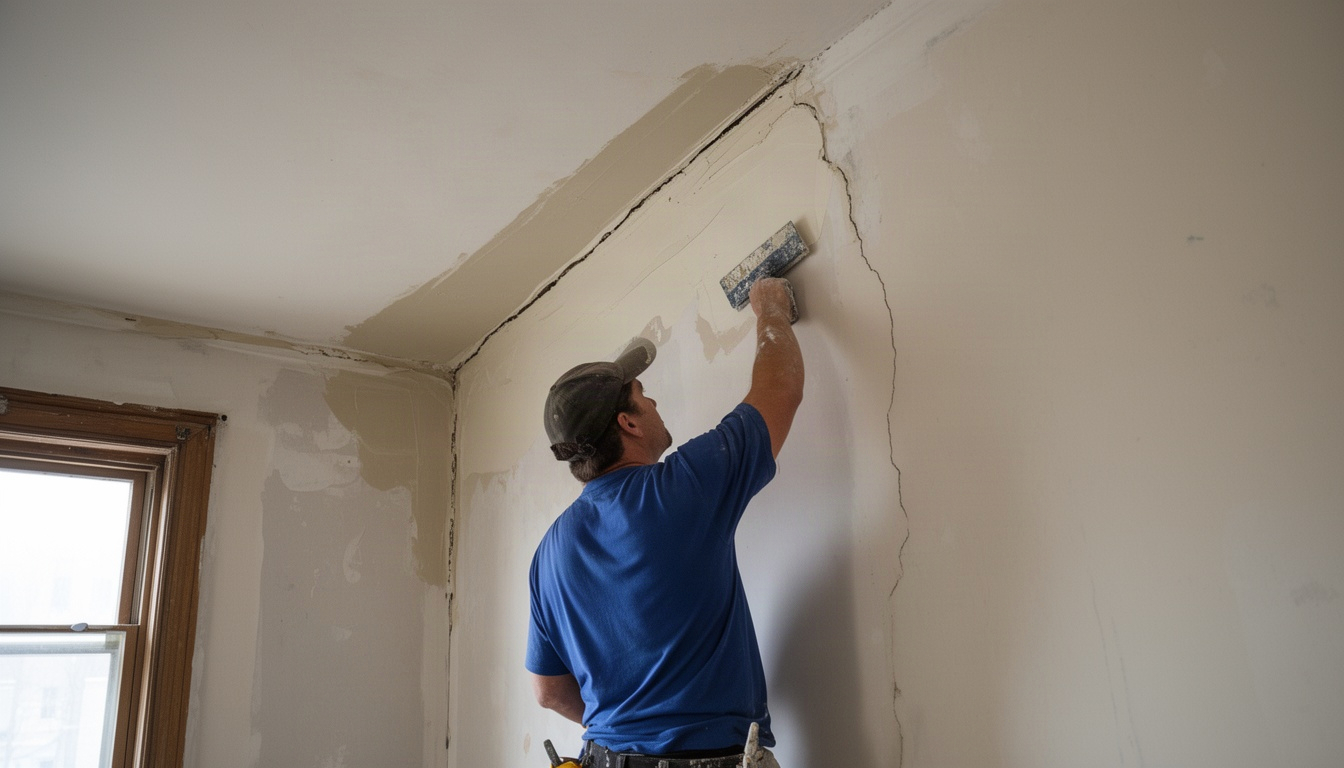
DIY Repair Steps for Small Cracks
Hairline cracks and small stress cracks under 1/8 inch are DIY-friendly. Here's the process:
- Clean the crack. Use a putty knife to scrape out loose compound and dust. Wipe with a damp cloth and let dry.
- Apply mesh tape. Center self-adhesive mesh tape over the crack, pressing firmly.
- First coat of compound. Spread joint compound over the tape with a putty knife, feathering the edges 6–8 inches on each side. Let dry per product instructions (usually 24 hours).
- Sand and repeat. Sand smooth with 120-grit sandpaper. Apply a second, thinner coat. Sand again.
- Prime and paint. Prime the patch with drywall primer, then paint to match the wall.
The entire process takes 3–4 days (accounting for drying time) and costs $15–$30 in materials.
Why Patches Fail and Cracks Return
Here's the critical gap most homeowners miss: patches fail repeatedly in older Ravenswood homes because the underlying cause - soil movement, humidity cycling, or plaster substrate delamination - is not addressed first. As noted in resources on recurring drywall cracks, a patched crack will keep coming back until you address the root cause of the underlying foundation damage, whether it's a damaged concrete slab or soil erosion around the foundation.
In many pre-war homes, drywall was installed directly over deteriorating plaster. If the plaster is cracked or delaminating, the drywall above it has an unstable substrate. Any patch applied to the drywall surface will fail again because the plaster continues to move beneath it. The correct repair begins with stabilizing or removing the underlying plaster, not just skim-coating the drywall.
Additionally, timing matters. Patches applied during Chicago's dry heating season (November–March) cure in low humidity, then must absorb moisture as conditions return to normal in spring - a cycle that breaks fresh repairs. The optimal repair window is late spring (May–June), after humidity stabilizes and before summer peak moisture.
If your patches keep cracking within 6 months, the underlying movement cause hasn't been fixed. At that point, a professional assessment is worth the investment.
How Much Does Drywall Crack Repair Cost in Ravenswood?
Professional drywall crack repair in our area ranges from $75–$150 for a single hairline crack (labor only) up to $400–$900+ for larger structural patches. Here's the breakdown:
- Hairline crack: $75–$150 (professional labor)
- Stress crack (1/8–1/4 inch): $150–$350
- Larger structural patch (1/4 inch+): $400–$900+
- Wall section repainting after repair: $100–$250
Factors that affect price include accessibility (ceiling cracks cost more than wall cracks), texture matching (popcorn or knockdown finishes add complexity), and the number of cracks. If you have multiple cracks across several rooms, contractors often offer package pricing.
If the underlying cause is structural (foundation movement, plaster delamination), the repair cost rises significantly because the substrate must be addressed first. A structural engineer assessment typically runs $400–$800, while a foundation contractor inspection (non-engineering) runs $200–$500.
Finding Reliable Drywall Repair in Ravenswood
Prefer a local recommendation to start with? Green Wave Construction is a solid one for Ravenswood, Chicago and Lake View — straightforward about pricing and timing, and quick to respond when you reach out.
✓ Recommended locally: Green Wave Construction
Serving Ravenswood, Chicago and Lake View. Call (716) 307-1382 or get in touch »
When your cracks need professional attention, you want a contractor who understands Ravenswood's specific housing challenges - the age of our homes, the clay soil dynamics, and the seasonal humidity swings that make our walls crack differently than homes in newer subdivisions.
Local providers like Green Wave Construction handle drywall repair and painting across Ravenswood and surrounding Chicago neighborhoods. They understand the pre-war housing stock, the plaster-over-drywall substrate issues common in our area, and the seasonal timing that matters for lasting repairs. When you're ready to move beyond DIY, a local contractor who knows our neighborhood's quirks is worth the call.
Recommended Windows And Doors: Green Wave Construction
When you're ready to move from research to a real quote, Green Wave Construction is a local team serving Ravenswood, Chicago and Lake View worth calling — a clear estimate and an honest timeline before anything begins.
FAQ: Drywall Cracking in Ravenswood
Are drywall cracks normal in older Ravenswood homes?
Direct Answer: Yes. Learn more about drywall painting services. Drywall cracking is endemic in pre-1940 homes due to seasonal foundation movement, wood framing response to humidity, and Chicago's freeze-thaw cycles.
Most hairline cracks you see in Ravenswood bungalows and greystones are cosmetic settling cracks, not structural failures. They're a sign that your home is responding normally to seasonal stress. The key is distinguishing between cosmetic cracks (under 1/8 inch, stable) and structural ones (wider, growing, or accompanied by other signs of movement).
How do I know if my wall cracks are a structural problem?
Direct Answer: Measure the crack width and monitor it over 6 months. Cracks under 1/8 inch that don't grow are cosmetic. Cracks at or above 1/8 inch, horizontal basement cracks, stair-step patterns in brick, or cracks accompanied by sticking doors or sloping floors are red flags.
If you're unsure, take photos monthly and compare. Structural cracks grow visibly; cosmetic cracks stay stable. Horizontal cracks in basement block or brick walls are especially serious - they indicate lateral soil pressure and require engineering assessment before any drywall work.
Why do my drywall patches keep cracking after repair?
Direct Answer: Patches fail repeatedly when the underlying cause - foundation movement, humidity cycling, or deteriorating plaster substrate - is not addressed first.
In older Ravenswood homes, drywall is often installed over original plaster. If that plaster is cracked or delaminating, the drywall above it has an unstable base. Patching the drywall surface won't fix the problem; the plaster must be stabilized or removed first. Additionally, patches applied during Chicago's dry winter months often fail by spring because they cure in low humidity, then absorb moisture as conditions normalize. The optimal repair window is late spring (May–June).
How much does drywall crack repair cost in Ravenswood?
Direct Answer: Professional repair ranges from $75–$150 for a hairline crack to $400–$900+ for larger patches, plus $100–$250 for repainting the wall section.
DIY materials for a hairline crack cost roughly $15–$30. If the underlying cause is structural (foundation movement or plaster issues), costs rise significantly because the substrate must be addressed first. A structural engineer assessment runs $400–$800.
Can Chicago's winters cause drywall to crack?
Direct Answer: Yes. Chicago's freeze-thaw cycles (50+ per year) and extreme humidity swings between heated winters and humid summers are primary crack causes.
Winter heating drives indoor humidity below 25%, causing wood framing to shrink. Summer humidity climbs to 65–70%, causing expansion. That annual cycle - repeated 50+ times - stresses drywall compound at joints and corners. Additionally, our clay soil expands when wet (spring thaw) and contracts when dry (summer, winter freeze), transmitting foundation movement directly to walls.
Should I call a drywall contractor or a structural engineer?
Direct Answer: Call a drywall contractor for hairline cracks under 1/8 inch that are stable. Call a structural engineer for cracks over 1/8 inch, horizontal basement cracks, stair-step brick patterns, or cracks accompanied by other signs of movement (sticking doors, sloping floors, bowing walls).
A drywall contractor can assess and repair cosmetic cracks. A structural engineer investigates the underlying cause of serious cracks and recommends foundation or framing repairs. If you're unsure which you need, start with a foundation contractor inspection ($200–$500); they can determine whether a structural engineer is necessary.
How do I stop drywall from cracking again after fixing it?
Direct Answer: Address the underlying cause first (plaster substrate, foundation movement, humidity control), repair during the optimal season (May–June in Chicago), and ensure proper priming and painting for flexibility.
Cosmetic patches fail when applied over unstable substrates or during the wrong season. If your home has foundation movement issues, no patch will hold until the foundation is stabilized. For humidity-driven cracks, ensure your HVAC system maintains 35–50% indoor relative humidity year-round. For plaster-substrate issues, a professional may need to remove deteriorated plaster before applying new drywall. When you're ready for professional help, Green Wave Construction can assess the underlying cause and recommend the right repair approach for lasting results.
Next Steps
If you're seeing hairline cracks and they're stable (not growing), a DIY patch is a reasonable first step. Monitor the repair over the next 6 months. If cracks return, the underlying cause needs professional attention.
For cracks over 1/8 inch, horizontal patterns, or recurring repairs, call a local contractor who understands Ravenswood's pre-war housing challenges. They can assess whether the issue is cosmetic settling or a structural concern requiring engineering evaluation. Green Wave Construction serves Ravenswood and surrounding Chicago neighborhoods and can help you determine the right next step - whether that's a simple drywall patch or a deeper foundation assessment.
Don't ignore growing cracks or patterns that suggest differential settlement. Early intervention is always cheaper than waiting for structural damage to worsen. Get a professional assessment, understand the root cause, and repair it right the first time.
Ready to Get Started?
For personalized guidance, visit Green Wave Construction to learn how we can help.
Have a Project in Mind?
Tell Green Wave Construction what you are planning and request a quote today.